
The Rio Grande Trade Triangle (1850s)
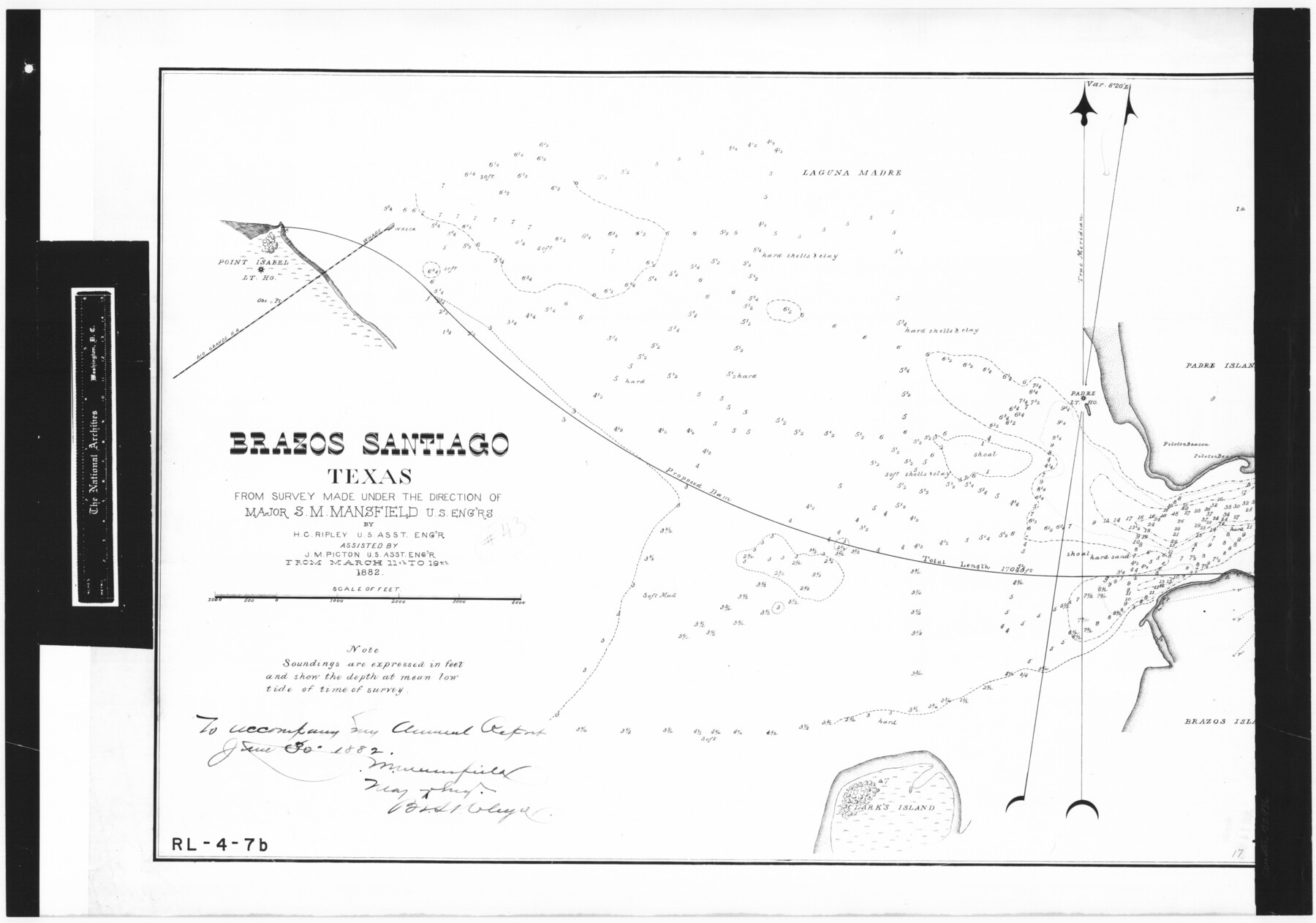
1. Brazos Santiago — The Ocean Gateway
In the early 1850s the Rio Grande economy revolved around a simple but powerful triangle. Ocean ships entered through Brazos Santiago, merchants handled the cargo at Brownsville and Matamoros, and mule trains carried the goods deep into northern Mexico to cities like Monterrey. At the center of this system stood Charles Stillman, quietly building the network that would later make him one of the most influential merchants on the frontier.
The Stillman letters quietly reveal something historians sometimes miss:
nearly all Rio Grande commerce in the early 1850s revolved around three geographic points.
Once you map them, you understand why Charles Stillman built his operations exactly where he did.

Before deep-water ports existed in South Texas, Brazos Santiago Pass was the main entrance from the Gulf of Mexico.
Ocean-going vessels could not sail directly up the Rio Grande, so they:
Anchored offshore at Brazos Santiago
Offloaded cargo onto lighters or shallow-draft vessels
Sent goods upriver to Brownsville and Matamoros

This is why letters mention:
crossing the bar
storms near the mouth of the river
steamer transfers
Without Brazos Santiago, the entire trade system collapsed.
2. Brownsville / Matamoros — The Commercial Hub
This twin-city zone became the financial and trading center of the region.
Here:
American merchants operated on the Brownsville side
Mexican merchants operated in Matamoros
Goods moved across the river constantly.
Merchants like Stillman handled:
import goods from the United States
export goods from Mexico
banking and credit
customs brokerage
freight forwarding
This is why so many letters in your collection are addressed simply to:
“Charles Stillman – Brownsville”
He was the node where everything passed through.
3. Monterrey — The Interior Market

Monterrey was the largest commercial center in northern Mexico.
Merchants there purchased:
imported textiles
tools
manufactured goods
luxury items from Europe and the U.S.
But these goods reached Monterrey only through the Rio Grande route:
Ocean ships → Brazos Santiago → Brownsville/Matamoros → wagon trains → Monterrey.
Your Marín Pérez y Hermanos letter is a perfect example of this network in action.

How the Triangle Worked
Think of it like this:
           MONTERREY
           (interior market)
                ▲
                │ mule trains / wagons
                │
BROWNSVILLE / MATAMOROS
 (merchant hub & finance)
                ▲
                │ river steamers / barges
                │
        BRAZOS SANTIAGO
        (ocean shipping)
Every shipment had to pass through all three points.
Why Brownsville Was Founded Exactly There
The location chosen by Stillman had three advantages:
1️⃣ Direct access to the Rio Grande navigation route
2️⃣ Close enough to Brazos Santiago for ocean trade
3️⃣ Positioned opposite Matamoros, Mexico’s existing commercial city
It was the perfect choke point for trade.
What the Stillman Letters Prove
Charles Stillman documents show each side of this triangle operating:
| Letter | Network shown |
|---|---|
| Phelps letters | Gulf shipping and New Orleans trade |
| Felipe Peña | ranch economy around Matamoros |
| Marín Pérez | Monterrey merchant remittances |
Together they reveal the entire commercial ecosystem of the Rio Grande frontier.
What the letters and early records reveal is that Stillman’s dominance did not come from one shipment or one partnership. It came from one strategic decision he made right after the Mexican–American War.
That decision shaped the entire Rio Grande trade system.
When the Mexican–American War ended in 1848, the Rio Grande became an international border overnight. Many merchants stayed in Matamoros or moved to New Orleans. Charles Stillman chose a different strategy. He placed himself exactly where the two economies met. From that point forward nearly every shipment entering the Rio Grande trade triangle—by sea, river, or wagon—passed within reach of his warehouses in Brownsville.
The Decision That Made the Trade Triangle Work
(1848–1849)
After the war ended with the Treaty of Guadalupe Hidalgo, the Rio Grande suddenly became an international boundary.
Most merchants made one of two choices:
operate in Matamoros (Mexico)
operate in New Orleans (U.S. shipping center)
But Charles Stillman did something different.
He positioned himself exactly on the new border, at the site that became Brownsville.
Why This Was Brilliant
Stillman’s location allowed him to control all three flows of trade at once.
1️⃣ International trade (United States ↔ Mexico)
American goods:
textiles
tools
manufactured goods
arrived from New Orleans and were sold across the river in Matamoros and northern Mexico.
Mexican goods:
hides
silver
livestock
moved the opposite direction.
Because Stillman operated on the U.S. side, he controlled the American side of customs and finance.
2️⃣ River transport
Stillman placed his operations on the navigable section of the Rio Grande.
This allowed goods to move:
Brazos Santiago → river craft → Brownsville warehouses.
Merchants farther inland could not do this efficiently.
3️⃣ Cross-border finance
The 1850s letters posted tell us
Merchants in Monterrey and Matamoros:
remitted funds to Stillman
asked him to draw drafts
trusted him to negotiate payments
He essentially became a frontier banker.
The Overlooked Advantage
There was another factor that made this work.
Stillman arrived before a banking system existed in South Texas.
So merchants needed someone who could:
store specie
extend credit
handle drafts
pay freight
negotiate insurance
Stillman’s firm did all of this.
The Result
By the early 1850s Stillman had become the central commercial node in the region.
The triangle now worked like this:
Brazos Santiago → Brownsville → Monterrey
Every shipment passed through his orbit.
That’s why in many letters the address simply reads:
“Charles Stillman – Brownsville.”
No street.
No firm name.
Everyone in the trade network knew where that meant.
Why This Matters for Stillman Letters Series
Most popular history focuses on Stillman during the Civil War cotton trade.
But your letters show that the real story begins earlier.
By 1853, he already controlled:
shipping coordination
cross-border trade
financial remittances
ranch supply networks
The Civil War merely supercharged a system he had already built.
Long before cotton made Brownsville famous during the Civil War, three other commodities quietly sustained the Rio Grande trade. Tobacco from Kentucky, mule caravans from Texas ranch country, and hides from northern Mexico moved through Stillman’s warehouses year after year. These humble goods built the commercial network that later carried millions of dollars in cotton through the same frontier gateway.
The Three Commodities That Dominated Rio Grande Trade Before Cotton
1. Tobacco
One of the most surprising commodities in the early Stillman letters is tobacco.
Large quantities of tobacco moved through a chain that looked like this:
Kentucky → Mississippi River → New Orleans → Brazos Santiago → Brownsville / Matamoros → Monterrey and interior Mexico.
Why tobacco?
Northern Mexico had strong demand, and importing it through the Rio Grande was often cheaper than bringing it overland from Mexican ports.
The tobacco trade required:
-
ocean shipping
-
river transport
-
warehousing
-
cross-border credit
All services Stillman provided.
This trade helped establish his commercial network years before cotton profits appeared.
Several letters — particularly those written by J. H. Phelps — hint at the booming mule and horse trade.
2. Mules and Horses
These animals were essential for frontier commerce.
They powered:
-
freight wagons
-
pack trains into the Mexican interior
-
ranch operations
-
military logistics
Prices around $100 per mule were mentioned in the correspondence — a very substantial amount in the 1850s.
In many ways, the animal trade was the transportation infrastructure of the frontier economy.
Without mules, the Rio Grande trade triangle could not function.
3. Hides and Livestock Products
Ranchers on both sides of the Rio Grande produced large numbers of cattle.
Before the famous Texas cattle drives began, the most valuable export was often the hide rather than the meat.
Hides were used in the industrializing world to make:
-
leather goods
-
harness equipment
-
machinery belts
Merchants purchased hides from ranchers like Felipe Peña, consolidated them in border warehouses, and shipped them through Gulf ports.
This trade linked rural ranches to the international economy.
Why Cotton Later Took Over
By the late 1850s and especially during the Civil War, cotton exploded as the dominant commodity because:
-
southern ports were blockaded
-
Texas cotton could move through Mexico
-
European demand was enormous
But cotton did not create the trade network.
It simply flowed through a system that had already been built by earlier commodities.
What the Letters Really Show
The Stillman papers reveal an economy that depended on:
-
tobacco shipments from the United States
-
livestock and mule trade across Texas
-
hides and ranch products from northern Mexico
Together these trades created the financial and transportation networks that allowed Stillman to become the central merchant of the Rio Grande frontier.

No comments:
Post a Comment