Showing posts with label Matamoros. Show all posts

2026/03/06

1850s The Rio Grande Trade Triangle

The Rio Grande Trade Triangle (1850s)

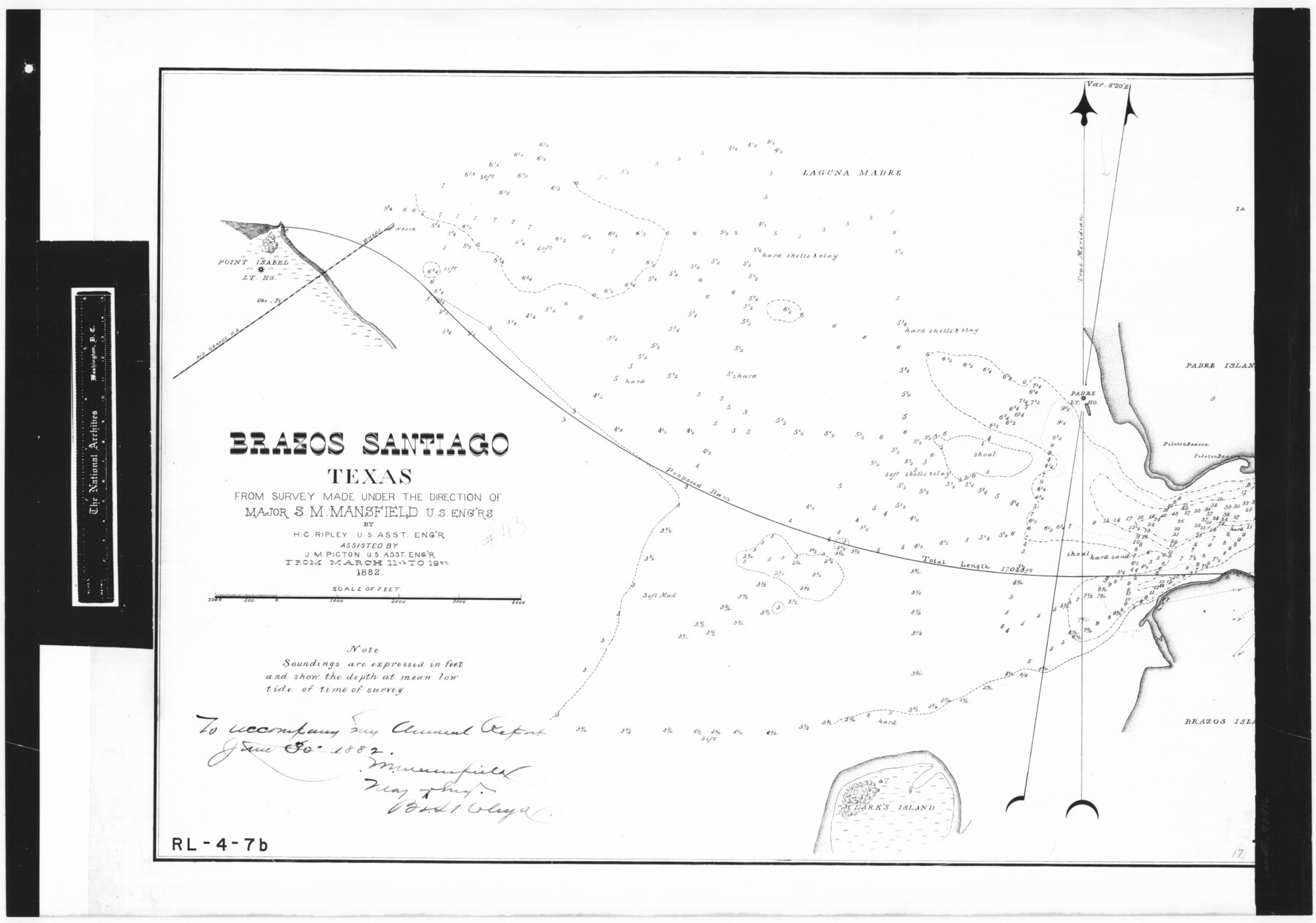
1. Brazos Santiago — The Ocean Gateway

In the early 1850s the Rio Grande economy revolved around a simple but powerful triangle. Ocean ships entered through Brazos Santiago, merchants handled the cargo at Brownsville and Matamoros, and mule trains carried the goods deep into northern Mexico to cities like Monterrey. At the center of this system stood Charles Stillman, quietly building the network that would later make him one of the most influential merchants on the frontier.

The Stillman letters quietly reveal something historians sometimes miss:

nearly all Rio Grande commerce in the early 1850s revolved around three geographic points.

Once you map them, you understand why Charles Stillman built his operations exactly where he did.

Image

Before deep-water ports existed in South Texas, Brazos Santiago Pass was the main entrance from the Gulf of Mexico.

Ocean-going vessels could not sail directly up the Rio Grande, so they:

  1. Anchored offshore at Brazos Santiago

  2. Offloaded cargo onto lighters or shallow-draft vessels

  3. Sent goods upriver to Brownsville and Matamoros

Image

This is why letters mention:

  • crossing the bar

  • storms near the mouth of the river

  • steamer transfers

Without Brazos Santiago, the entire trade system collapsed.
Image


2. Brownsville / Matamoros — The Commercial Hub

This twin-city zone became the financial and trading center of the region.

Here:

  • American merchants operated on the Brownsville side

  • Mexican merchants operated in Matamoros

Goods moved across the river constantly.

Merchants like Stillman handled:

  • import goods from the United States

  • export goods from Mexico

  • banking and credit

  • customs brokerage

  • freight forwarding

This is why so many letters in your collection are addressed simply to:

“Charles Stillman – Brownsville”

He was the node where everything passed through.


3. Monterrey — The Interior Market

Image

Monterrey was the largest commercial center in northern Mexico.

Merchants there purchased:

  • imported textiles

  • tools

  • manufactured goods

  • luxury items from Europe and the U.S.

But these goods reached Monterrey only through the Rio Grande route:

Ocean ships → Brazos Santiago → Brownsville/Matamoros → wagon trains → Monterrey.

Your Marín Pérez y Hermanos letter is a perfect example of this network in action.

Image


How the Triangle Worked

Think of it like this:

           MONTERREY
           (interior market)
                ▲
                │ mule trains / wagons
                │
BROWNSVILLE / MATAMOROS
 (merchant hub & finance)
                ▲
                │ river steamers / barges
                │
        BRAZOS SANTIAGO
        (ocean shipping)

Every shipment had to pass through all three points.


Why Brownsville Was Founded Exactly There

The location chosen by Stillman had three advantages:

1️⃣ Direct access to the Rio Grande navigation route
2️⃣ Close enough to Brazos Santiago for ocean trade
3️⃣ Positioned opposite Matamoros, Mexico’s existing commercial city

It was the perfect choke point for trade.


What the Stillman Letters Prove

Charles Stillman documents show each side of this triangle operating:

LetterNetwork shown
Phelps lettersGulf shipping and New Orleans trade
Felipe Peñaranch economy around Matamoros
Marín PérezMonterrey merchant remittances

Together they reveal the entire commercial ecosystem of the Rio Grande frontier.


What the letters and early records reveal is that Stillman’s dominance did not come from one shipment or one partnership. It came from one strategic decision he made right after the Mexican–American War.

That decision shaped the entire Rio Grande trade system.

When the Mexican–American War ended in 1848, the Rio Grande became an international border overnight. Many merchants stayed in Matamoros or moved to New Orleans. Charles Stillman chose a different strategy. He placed himself exactly where the two economies met. From that point forward nearly every shipment entering the Rio Grande trade triangle—by sea, river, or wagon—passed within reach of his warehouses in Brownsville.

The Decision That Made the Trade Triangle Work

(1848–1849)

After the war ended with the Treaty of Guadalupe Hidalgo, the Rio Grande suddenly became an international boundary.

Most merchants made one of two choices:

  • operate in Matamoros (Mexico)

  • operate in New Orleans (U.S. shipping center)

But Charles Stillman did something different.

He positioned himself exactly on the new border, at the site that became Brownsville.


Why This Was Brilliant

Stillman’s location allowed him to control all three flows of trade at once.

1️⃣ International trade (United States ↔ Mexico)

American goods:

  • textiles

  • tools

  • manufactured goods

arrived from New Orleans and were sold across the river in Matamoros and northern Mexico.

Mexican goods:

  • hides

  • silver

  • livestock

moved the opposite direction.

Because Stillman operated on the U.S. side, he controlled the American side of customs and finance.


2️⃣ River transport

Stillman placed his operations on the navigable section of the Rio Grande.

This allowed goods to move:

Brazos Santiago → river craft → Brownsville warehouses.

Merchants farther inland could not do this efficiently.


3️⃣ Cross-border finance

The 1850s letters posted tell us

Merchants in Monterrey and Matamoros:

  • remitted funds to Stillman

  • asked him to draw drafts

  • trusted him to negotiate payments

He essentially became a frontier banker.


The Overlooked Advantage

There was another factor that made this work.

Stillman arrived before a banking system existed in South Texas.

So merchants needed someone who could:

  • store specie

  • extend credit

  • handle drafts

  • pay freight

  • negotiate insurance

Stillman’s firm did all of this.


The Result

By the early 1850s Stillman had become the central commercial node in the region.

The triangle now worked like this:

Brazos Santiago → Brownsville → Monterrey

Every shipment passed through his orbit.

That’s why in many letters the address simply reads:

“Charles Stillman – Brownsville.”

No street.
No firm name.

Everyone in the trade network knew where that meant.


Why This Matters for Stillman Letters Series

Most popular history focuses on Stillman during the Civil War cotton trade.

But your letters show that the real story begins earlier.

By 1853, he already controlled:

  • shipping coordination

  • cross-border trade

  • financial remittances

  • ranch supply networks

The Civil War merely supercharged a system he had already built.

Long before cotton made Brownsville famous during the Civil War, three other commodities quietly sustained the Rio Grande trade. Tobacco from Kentucky, mule caravans from Texas ranch country, and hides from northern Mexico moved through Stillman’s warehouses year after year. These humble goods built the commercial network that later carried millions of dollars in cotton through the same frontier gateway.

The Three Commodities That Dominated Rio Grande Trade Before Cotton

1. Tobacco

One of the most surprising commodities in the early Stillman letters is tobacco.

Large quantities of tobacco moved through a chain that looked like this:

Kentucky → Mississippi River → New Orleans → Brazos Santiago → Brownsville / Matamoros → Monterrey and interior Mexico.

Why tobacco?

Northern Mexico had strong demand, and importing it through the Rio Grande was often cheaper than bringing it overland from Mexican ports.

The tobacco trade required:

  • ocean shipping

  • river transport

  • warehousing

  • cross-border credit

All services Stillman provided.

This trade helped establish his commercial network years before cotton profits appeared.

Several letters — particularly those written by J. H. Phelps — hint at the booming mule and horse trade.

2. Mules and Horses

These animals were essential for frontier commerce.

They powered:

  • freight wagons

  • pack trains into the Mexican interior

  • ranch operations

  • military logistics

Prices around $100 per mule were mentioned in the correspondence — a very substantial amount in the 1850s.

In many ways, the animal trade was the transportation infrastructure of the frontier economy.

Without mules, the Rio Grande trade triangle could not function.

3. Hides and Livestock Products

Ranchers on both sides of the Rio Grande produced large numbers of cattle.

Before the famous Texas cattle drives began, the most valuable export was often the hide rather than the meat.

Hides were used in the industrializing world to make:

  • leather goods

  • harness equipment

  • machinery belts

Merchants purchased hides from ranchers like Felipe Peña, consolidated them in border warehouses, and shipped them through Gulf ports.

This trade linked rural ranches to the international economy.


Why Cotton Later Took Over

By the late 1850s and especially during the Civil War, cotton exploded as the dominant commodity because:

  • southern ports were blockaded

  • Texas cotton could move through Mexico

  • European demand was enormous

But cotton did not create the trade network.

It simply flowed through a system that had already been built by earlier commodities.


What the Letters Really Show

The Stillman papers reveal an economy that depended on:

  • tobacco shipments from the United States

  • livestock and mule trade across Texas

  • hides and ranch products from northern Mexico

Together these trades created the financial and transportation networks that allowed Stillman to become the central merchant of the Rio Grande frontier.

1853 Felipe Peña: A Rancher Writes from Matamoros

 This is a very nice piece of correspondence because it shows the Mexican side of the Rio Grande business network that surrounded Charles Stillman. The letter is short but historically valuable because it reveals everyday financial dealings between merchants and ranchers in the Matamoros region.


📜 Letter from Felipe Peña

Matamoros, September 4, 1853

Approximate transcription (modernized for readability)

Sr. Don Carlos Stillman

Muy Señor mío:

Le digo a V. que Ignacio se encuentra muy malo, por lo que respecta a la enfermedad, y por no esperar su dinero lo he estado aquí dentro de Matamoros, y ello lo harán a su hermano en todo el tiempo que se pueda disponer.

De aquí puede V. recibir de ella la cantidad de 362 pesos con 44 centavos, y quedo muy agradecido.

Mañana voy para el rancho y hoy mismo le escribiré si puedo mandar.

Su amigo que lo aprecia,

Felipe Peña


Plain English Summary

Felipe Peña writes to Charles Stillman from Matamoros explaining that:

  • A man named Ignacio is seriously ill.

  • Because of this illness and delays involving money, Peña has remained in Matamoros.

  • Stillman can collect 362 pesos and 44 centavos owed to him.

  • Peña plans to leave for his ranch the following day.

  • He promises to write again if he can arrange the payment.


Historical Value of This Letter

This little note reveals several useful insights about the 1850s Rio Grande economy.

1️⃣ Cross-border business was constant

Stillman in Brownsville was regularly dealing with people in Matamoros ranching networks.

Money, livestock, and credit moved across the river almost daily.


2️⃣ Ranch owners and merchants depended on each other

Peña mentions going “al rancho” (to the ranch), showing he was likely a stockman or rural landholder connected to the trade network supplying Stillman.


3️⃣ Mexican currency was still the working medium

The amount listed:

362 pesos 44 centavos

Mexican silver currency circulated widely on both sides of the Rio Grande.


4️⃣ Business could be delayed by illness or travel

The note shows how fragile frontier business could be.
If one person fell sick or left for the ranch, payments stalled.


Small Detail I Like

The tone is very polite and warm:

“Su amigo que lo aprecia”
Your friend who appreciates you

This shows Stillman had personal relationships with Mexican merchants and ranchers, not just formal business contacts.


Interesting Context

In 1853, the Rio Grande valley economy depended on:

  • cattle

  • hides

  • mule trade

  • tobacco shipments

  • imported manufactured goods

Men like Peña were the local ranching suppliers, while Stillman handled credit, shipping, and export networks.


Cast of Characters

The Stillman Papers (1850–1855)

Merchants, ranchers, lawyers, and frontier associates appearing in the correspondence of Charles Stillman


Charles Stillman

Merchant and founder of Brownsville

A Connecticut-born merchant who established himself on the Rio Grande following the Mexican–American War. Stillman became the central commercial figure of Brownsville, coordinating trade between:

  • New Orleans

  • Matamoros

  • Northern Mexico

  • Interior Texas

His business included freight forwarding, credit extension, cotton export, livestock transactions, and the import of manufactured goods.


Elizabeth Stillman

Wife of Charles Stillman

Elizabeth accompanied her husband during the early years of settlement on the Rio Grande frontier. Though rarely appearing directly in business letters, her presence is occasionally referenced in correspondence concerning travel, health, and domestic life during the early years of Brownsville.


J. H. Phelps

Merchant correspondent — New Orleans

A commercial associate who wrote several letters to Stillman in 1853 describing:

  • maritime travel to New Orleans

  • business conditions in the port

  • speculation about livestock ventures in Texas

Phelps appears to have been exploring the possibility of entering the Texas cattle or mule trade.


Felipe Peña

Rancher or regional associate — Matamoros area

Peña appears in a brief 1853 letter concerning a payment owed to Stillman. His correspondence suggests he operated from or near a ranch outside Matamoros and participated in the livestock or rural supply economy that supported cross-border commerce.


Ignacio (surname uncertain)

Associate mentioned in Peña correspondence

A man described as seriously ill in Peña’s letter of September 4, 1853. His illness delayed financial arrangements involving a payment owed to Stillman.


José Morell

Business associate

Morell appears in several Stillman letters connected to commercial operations and financial arrangements along the Rio Grande. He likely participated in the merchant network linking Brownsville and Matamoros.


Marks

Merchant associate

Referenced in letters dealing with business transactions and accounts. The surname appears in the network of merchants supplying goods and managing credit across the border region.


Avalos

Regional contact or supplier

Appears in correspondence connected with financial accounts and commercial matters in the Matamoros–Brownsville trade network.


Reynolds

Commercial associate

Mentioned in letters discussing trade activity and possibly freight or supply arrangements tied to Rio Grande commerce.


Basse & Hord

Legal or commercial firm

The firm appears in documents connected with litigation related to land claims in the Brownsville area, particularly matters involving the Cavazos family grant.


María Josefa Cavazos

Heir of Spanish land grant claims

A central figure in the complex land disputes surrounding the Cavazos grant, portions of which later overlapped with land occupied by Fort Brown and the emerging town of Brownsville.


Judge John Watrous

United States Federal Judge

Watrous presided over several important land claim cases in Texas during the mid-19th century. His rulings played a role in disputes involving the Cavazos family and other Spanish land grant claims.


The Frontier Network

Together these individuals represent the interlocking systems that created Brownsville’s early economy:

  • American merchants

  • Mexican ranchers

  • Gulf Coast shipping agents

  • Lawyers handling land claims

  • Investors speculating in livestock and trade

Through their letters we see a frontier town slowly transforming into a commercial gateway between the United States and Mexico.


2026/03/05

1852 0614 Monterrey - Lorenzo Oliver Writes to Charles Stillman

Trouble on the Road to Monterrey


Lorenzo Oliver Writes to Charles Stillman, June 14, 1852

By the summer of 1852, the trading network centered in Brownsville and Matamoros extended hundreds of miles into northern Mexico. One of the merchants participating in this system was Lorenzo Oliver, writing from Monterrey, the commercial capital of the Mexican interior.

His letter of June 14, 1852, addressed to Charles Stillman & Brother, offers a vivid example of the difficulties merchants faced when moving goods across the rugged trade routes between the Rio Grande and the interior.


A Shipment Arrives Damaged

Oliver reports that a shipment of goods sent from the Rio Grande region arrived in poor condition.

The damage appears to have occurred during transport — likely along the long wagon road connecting the river ports with Monterrey. This route was one of the principal commercial corridors of northern Mexico, but it was far from easy travel.

Merchants moving goods along the road faced:

  • rough terrain

  • river crossings

  • banditry

  • delays caused by weather or military patrols

Oliver indicates that the merchandise arrived spoiled or damaged, forcing him to address the situation with the local buyers and authorities.


Documentation and Claims

A notable section of the letter discusses certificates and verification of the damage.

Oliver explains that he obtained official confirmation from witnesses or local authorities verifying the condition of the shipment. This was important because damaged goods could lead to disputes between merchants over responsibility.

Such documentation served as a kind of early commercial insurance process, allowing merchants to prove that losses occurred during transportation rather than through negligence by the receiving agent.


Frontier Commercial Formalities

The letter shows how surprisingly formal these transactions could be.

Oliver describes steps taken to:

  • inspect the merchandise

  • verify the damage

  • establish the value of the loss

He references the price of the goods and the expected proceeds from their sale. The letter also hints that the goods were being sold or liquidated at reduced value due to their condition.

Even in the rough conditions of the frontier economy, merchants maintained fairly structured commercial practices.


Monterrey as a Major Market

Oliver’s presence in Monterrey reminds us that Stillman’s network extended well beyond the border towns.

Monterrey was one of the most important commercial centers in northern Mexico. Goods entering through the Rio Grande were distributed from there throughout the region, reaching cities such as:

  • Saltillo

  • San Luis Potosí

  • Zacatecas

  • the mining districts of northern Mexico

For merchants like Stillman, having trusted correspondents in Monterrey was essential to reaching these inland markets.


The Risk Built into Every Shipment

The letter underscores a central reality of frontier commerce:

Every shipment carried significant risk.

Goods might be:

  • delayed

  • damaged

  • stolen

  • confiscated by authorities

  • or devalued before reaching market

Merchants like Oliver served as Stillman’s eyes and hands in the interior, navigating these risks and reporting the results.


A Merchant Network Stretching Across Borders

When viewed together with the other letters in the Stillman Papers, Oliver’s correspondence helps illustrate the remarkable geographic reach of the Rio Grande trade network.

By the early 1850s, Stillman’s commercial system connected:

Brownsville and Matamoros
↓
Rio Grande City and Camargo
↓
Monterrey
↓
the interior markets of northern Mexico

Through this network, textiles, hardware, tools, and other manufactured goods flowed south — while hides, wool, and other frontier products moved north toward American and European markets.


What Makes This Letter Special

Unlike some of the other correspondence — which often deals with sales and credit — Oliver’s letter focuses on logistics and transport problems.

That makes it particularly valuable for historians.

It reminds us that the success of frontier merchants depended not only on buying and selling, but also on managing the hazards of distance, roads, and transportation.


Charles Stillman and Jesús de Lira, March 25, 1852

A Merchant Letter Across the Rio Grande


Charles Stillman and Jesús de Lira, March 25, 1852

In the spring of 1852, a letter written in Matamoros, Mexico, by merchant Jesús de Lira arrived across the Rio Grande in Brownsville at the office of Charles Stillman & Co.

The letter reveals the everyday workings of frontier commerce along the lower Rio Grande — a business world where merchants on both sides of the river coordinated shipments, sales, and credit in a rapidly expanding border economy.

What emerges from this correspondence is a vivid snapshot of how trade actually functioned in the early years of Brownsville.


The Immediate News: Goods Have Arrived and Sold

De Lira begins by reassuring Stillman that his merchandise arrived safely:

He reports that the shipment reached Matamoros without incident or delay, and that the goods had been successfully processed and sold.

Among the goods mentioned are:

  • Casinetes (coarse wool fabrics)

  • Casimires (fine wool cloths / cassimere fabric)

  • Mantles or mantas (blankets or heavy cloth)

These fabrics were staples of frontier commerce. Merchants like Stillman imported them through Gulf ports and distributed them throughout northern Mexico and South Texas.

De Lira reports that most of the fabrics sold quickly, though a few pieces had to be returned because of damage in transport.

This tells us something important about the trade:
goods moved fast, but quality still mattered.


A Merchant’s Problem: Competition

One of the most revealing parts of the letter concerns competition from European merchants.

De Lira explains that:

German merchants in the region are offering long credit terms to customers.

This was a major challenge in the frontier economy.

Many European trading houses — especially German firms — operated with large pools of credit capital. They could afford to extend long payment periods to customers.

Local merchants like de Lira and Stillman often had to compete with these generous terms.

In effect, customers could buy goods now and pay months later.

That practice became common in Mexican markets during the mid-19th century.


Cash Versus Credit

De Lira notes that he could have sold goods on credit, but chose not to.

Instead, he tried to sell merchandise for cash.

His goal was to accumulate funds that he could send back to Stillman — possibly 3,000–4,000 pesos.

This reveals the constant balancing act frontier merchants faced:

StrategyRisk
Sell for cashSlower sales but secure payment
Sell on creditFaster sales but risk of default

Credit sales were extremely common, but merchants were cautious.

Cash was king on the frontier.


Stillman’s Binational Trading Network

This letter illustrates how Stillman’s commercial system worked across the Rio Grande.

The chain looked roughly like this:

Northern suppliers and import houses
↓
Charles Stillman & Co., Brownsville warehouses
↓
Mexican merchants like Jesús de Lira in Matamoros
↓
Interior markets of northern Mexico

Through this system, goods flowed constantly across the border.

Brownsville functioned as the gateway between the American Gulf economy and the Mexican interior.


What the Letter Shows About the Rio Grande Economy

Even in this single piece of correspondence, we see several defining features of the frontier economy:

1. Cross-border trade was routine.
Business moved easily between Brownsville and Matamoros.

2. Merchants operated in multiple languages.
Letters were written in English and Spanish depending on the partner.

3. Credit dominated commerce.
Long payment terms shaped the market.

4. Competition was international.
American, Mexican, and European merchants all competed in the same marketplace.


The Human Tone of the Letter

Despite its commercial purpose, the letter opens warmly:

“Mi querido y fino amigo”
“My dear and esteemed friend.”

This reminds us that frontier commerce depended heavily on personal trust and relationships.

Without reliable banks or formal financial systems on the border, business often depended on reputation and personal connections between merchants.

Stillman’s success owed much to his ability to maintain these relationships on both sides of the river.


The early economy of Brownsville was not isolated or provincial.
It was part of a dynamic international trading system linking the Rio Grande to the Gulf of Mexico, New Orleans, Europe, and the interior of Mexico.

And letters like this one were the threads that held that network together.


2017/07/03

1910s - Various Scenes in Matamoros, Tamaulipas, Mexico

Photos from Robert Wagner digitized photo collection courtesy of William Quinones and Brownsville Heritage Museum - Brownsville Historical Association.
 Gathering of caballeros from main plaza near Teatro-Salon Cuauntemoc.
 This appears to be two Mexican men helping man onto car while three Americans look on. 
Another revolutionary scene being played out in downtown Matamoros.  A good Matamoros historian could probably identify streets and buildings and his name just happens to be Adrian Garza Dragustinovis from "Mi Matamoros Antiguo." He  identifies this as Gonzalez St between 8th and 9th (north sidewalk).  
 Scene from main plaza in front of Catedral de Nuestra Senora del Refugio 
Postcard of church image found using Google 
Three men riding horse carriage with another man passed out in back.  Is he dead or crudo? 

Photo analysis: An early 1910's scene from the edge of Ro Grande on Matamoros

The advantage of scanning photographs is that it eliminates the need to handle photos or searching for your most powerful magnifying lens to zoom in on all the details to make a seemingly uninteresting photo with little information worth looking at closely.  This photo was scanned several years ago for William Quinones who asked to have his family photos digitized by the Brownsville Heritage Museum and was chosen among a few others depicting various scenes in Matamoros, Tamaulipas, Mexico across the Rio Grande from Brownsville, Texas.  There are no identifying postcard markings and it doesn't appear to have been taken by our most prolific photographer at the time, Robert Runyon. 

Here is as much as we can tell by looking the photograph by comparing it to others from the era.
The very first step is to enhance the photograph to remove the fading or cloudy haze which sometimes appears on vintage photographs using photo enhancement software.  In this case a basic edition of Photoshop Elements is good enough to significantly improve the photo's quality.
Now we can assess the situation.  At first glance there appears to be some activity of interest in the background where people are gathered and a small group is walking in the direction of the camera.  To the left is a wood building and a small shed next to a large poster-sized advertisement.
A closer look reveals that the framed structure behind the trees is the old Brownsville-Matamoros bridge built in 1910 which means those people are standing near the edge of the Rio Grande.
There were several ferry crossings to take people from one side of the river to the other.  Most photos from this place and time show ferry boats near Brownsville-Matamoros proper.  We're more interested in what appearances were like down the river near the old bridge rather than where the "new" Gateway International Bridge would be built and opened by July 4th, 1928.  Here we see ferry service but it is quite a way from old bridge seen in the distance.
 Here's another that appears to be same location which identifies Santa Cruz -  a small "colonia" or community next to Matamoros which has since been absorbed by that city.  There is a "Carta Blanca" beer advertisement which will take a closer look at using another photo from about the same time.
Back to the photo - note the sign propped up behind the shed which shows part of Rio Grande and bank on U.S. side.  It appears that the numerous 2x4 support framing is being used to a hold much larger sign facing the river to attract business from the Brownsville side.  
This postcard shows what the sign may have looked like.  In this case it's an ad for Carta Blanca beer and the Crixell Saloon.  There were Crixell bars on both sides of the river as we already know from our local business and political history.  Click on --> THIS <-- for more about the Crixells brothers Jose, Teofilo and Vicente.
The photo was further enhanced to bring out detail from the Cottolene shortening advertisement.  
 A quick search revealed that Cottolene was a rival of Crisco which is still sold today.  The goal was to find an exact copy of the poster with the woman serving her children but none was found.  What all these sample ads have in common is a woman in apron etc.
This shows illustrations of working and middle class women of the early 1900s and 1911-1915 woman's hairstyle which was also ideal for wearing the large hats of the era but enough of that....
What is of most interest is the label above the advertisement which clearly says "Dittmann Advertising Service."  
 Adolf Dittmann arrived in Brownsville, Texas in 1908 and was a man of many talents.
As a young man he left Salt Lake City to work as a magician in vaudeville theaters in Chicago, Boston and New York.  He also worked in a print shop and even composed and published music.  A short stint as a farmer in Florida and Brownsville, Texas convinced him that what he really wanted to do was return to the theater and magic and continue printing which is what he did and he built the very first movie theater in Brownsvile with stage for vaudeville performances. He also learned photography and later brought a 35mm moving film camera.
Here's another unidentified photo which my be Adolf Dittmann filming on or near Fort Brown
 Here is the theater he built in 1910 at 1118 E Washington St (next to present day Rutledge Burger).
 Colorized Robert Runyon photo
 This Robert Runyon photo shows inside of restaurant with poster ad on the right.
Note at bottom the ad is for Dittmann's Theater.  Adolf eventually sold the theater around the late 1930s or early 1940s and continued printing signs and also opened one of the first trailer park resorts on Central Blvd.

While we still didnt learn much about the people and place in the photograph and what interested the photographer to take a photo, we at least identified the advertisement, location and era in which the photo was taken.  For all our guesses, the photo may have been taken by Adolf Dittman himself but without proof, we can only assume it might have been.