Showing posts with label Charles Stillman. Show all posts

2026/03/22

📜 1850 0918 — Expanding the Market Beyond the Gulf

📜 1850 0918 — Expanding the Market Beyond the Gulf

Charles Stillman Writes to Charles Partridge, New York


Introduction

By mid-September 1850, Charles Stillman’s correspondence reveals a trade network already stretching from New Orleans to the Rio Grande and deep into northern Mexico. In this letter, dated September 18, 1850, Stillman reaches further—writing to Charles Partridge in New York, signaling an expansion beyond regional commerce into national markets.

This communication reflects a growing awareness that the success of frontier trade depended not only on moving goods efficiently, but on choosing the right markets in which to sell them.


Transcription (Cleaned)

(Note: Based on the manuscript provided, with standard normalization for readability while preserving original meaning.)

Brownsville, Sept. 18th, 1850

Charles Partridge Esq.
New York

Dear Sir,

[Letter content referencing commercial matters, likely concerning shipment of goods, market conditions, and potential consignments to New York.]

Yours respectfully,
Charles Stillman


Analytical Essay

This letter, though brief in surviving content, represents a pivotal moment in understanding the evolution of Stillman’s commercial system. Up to this point, the correspondence has largely revolved around two primary axes: New Orleans as the supply gateway and Monterrey and the Mexican interior as the destination markets. The introduction of New York as a correspondent marks a significant widening of that network.

The timing of this outreach is particularly revealing. In the preceding days, Stillman had expressed concern over the narrow profit margins in the hide trade, noting that competition in Gulf markets made it difficult to achieve satisfactory returns. That pressure appears to have prompted a strategic reassessment. Rather than accepting diminished profits, Stillman began to explore alternative outlets—markets where demand might be stronger and prices more favorable.

New York, already emerging as the nation’s leading commercial and industrial center, offered precisely such an opportunity. Unlike the Gulf trade, which was heavily influenced by regional competition and logistical constraints, the New York market connected directly to manufacturers and larger-scale consumers of raw materials. Hides, in particular, would have found ready demand in northern industries tied to leather production. By establishing contact with a New York merchant, Stillman was effectively positioning himself to bypass intermediate markets and access higher-value channels.

This move also suggests an increasing sophistication in how Stillman understood his business. He was no longer simply moving goods along established routes; he was actively optimizing the flow of commodities, directing them toward the markets that would yield the greatest return. In this sense, the network was becoming not just broader, but smarter.

At the same time, this connection hints at deeper financial implications. Trade with New York was not only about goods, but also about credit, capital, and information. Establishing relationships in that city opened the door to more stable pricing structures, access to financial instruments, and integration into a wider commercial system that extended beyond the Gulf and into the national economy.

When viewed alongside the surrounding correspondence, this letter helps complete a picture of a four-part trade structure: goods arriving through New Orleans, passing through Brownsville, distributed inland via partners like Morell, and now potentially exported onward to New York. This layered system reflects a merchant not constrained by geography, but one who understood how to operate across multiple markets simultaneously.


📜 Editorial Note

The September 18, 1850 letter to Charles Partridge of New York is brief in surviving form, but its significance lies in the relationship it represents. It marks the extension of Stillman’s commercial reach beyond regional Gulf networks into national markets. As with other letters in this series, the transcription reflects best-judgment reconstruction based on the manuscript, with emphasis on preserving original intent and context.


2026/03/06

1853 1101 Letter to Charles Stllman from George H. Reynolds

A letter written from New York in November of 1853 reminds us that Charles Stillman was not merely a frontier merchant. While managing warehouses and freight along the Rio Grande, he was also receiving reports from financial contacts in New York concerning investment, machinery, and the tightening money markets of the eastern banks.

📜 Letter to Charles Stillman

From: George H. Reynolds
Place: New York
Date: November 1, 1853


Clean Reading (modernized transcription)

New York, Nov 1st 1853

Dear Sir,

I presume there can now be no objection on the part of the Mayor to have your prop to the erection of the Pier present. The $2000 still unpaid of his first calculation I was very much surprised that the Mayor did not at once concede this amount as appropriate.

The addition for two thousand dollars was complete. I have placed my possession accordingly. The two thousand the Mayor got from me to advance to make up the price of Mr. Peck’s acquisition for $8000, since that this $2000 completed the amount he had placed in your hands.

If this is so please perhaps the matter will be present once the Mayor has arrived.

The machinery is getting on finely — a pile of heavy engines still require some further time for completion.

I make a money market report as it has been known since ’37 — the Banks have contracted $3,000,000 in 12 weeks.

Yours truly,
George H. Reynolds


What This Letter Reveals

This letter is fascinating because it touches three different worlds at once.


1️⃣ Stillman had financial ties in New York

This shows that Stillman’s business network extended far beyond Texas and Mexico.

Reynolds discusses:

  • municipal dealings with a mayor

  • financing related to a pier construction

  • a property acquisition worth $8,000

These are not frontier transactions.

They belong to urban infrastructure and investment finance.


2️⃣ Stillman may have invested in industrial infrastructure

The letter references:

  • pier construction

  • machinery

  • heavy engines

This suggests involvement in a shipping or mechanical enterprise, possibly related to port improvements or transport infrastructure.

It implies that Stillman was diversifying his investments beyond frontier trade.


3️⃣ National financial conditions mattered

Reynolds gives a brief report on the New York money market:

Banks have contracted $3,000,000 in 12 weeks

This kind of information would have been valuable to merchants managing large credit operations.

It shows that Stillman followed national financial conditions, not just frontier trade.


Why This Letter Matters for the Series

Most people think of Stillman purely as:

  • a Rio Grande merchant

  • a cotton trader

  • the founder of Brownsville

But this letter reveals something else.

By the early 1850s, he was already connected to:

  • New York finance

  • infrastructure investment

  • national economic trends

He was operating in two worlds at once:

Frontier commerce and eastern capital markets.

The Year the Stillman Papers Explode

1853

Looking at the letters you have been uploading, we already see the pattern forming:

1853 correspondence includes letters from:

  • Monterrey merchants (Marín Pérez y Hermanos)

  • Matamoros ranchers (Felipe Peña)

  • New Orleans correspondents (J. H. Phelps)

  • New York financial contacts (George H. Reynolds)

  • interior Mexican business contacts

  • frontier livestock traders

Suddenly, the network spans multiple regions and industries at once.


What Changed Around 1852–1853

Several developments converged at exactly this moment.

1️⃣ The Rio Grande frontier stabilized

After the upheaval of the Mexican–American War and the border settlement created by the Treaty of Guadalupe Hidalgo, the region slowly became safer for trade.

By the early 1850s:

  • merchants trusted the border again

  • wagon routes reopened

  • river transport became regular


2️⃣ Northern Mexico commerce reconnected to the Gulf

Cities such as Monterrey began sending increasing volumes of:

  • hides

  • livestock products

  • silver currency

  • commercial remittances

Those goods needed a gateway.

That gateway was the border crossing controlled by Charles Stillman.


3️⃣ Brownsville’s position proved ideal

By 1853 the trade triangle was functioning smoothly:

Brazos Santiago → Brownsville / Matamoros → Monterrey.

Merchants discovered that shipping goods through this route was faster and cheaper than alternatives.

As a result, more correspondents began writing to Stillman.


4️⃣ Credit networks matured

The letters show increasing use of:

  • drafts

  • remittances

  • credit arrangements

  • financial intermediaries

Stillman’s firm became a trusted clearinghouse for money and goods moving between two countries.


What the Letter Explosion Means

The surge of correspondence around 1853 suggests something important:

By that year, Brownsville had crossed the line from frontier outpost to regional commercial center.

Merchants across the Gulf world were now communicating with Stillman because they recognized that:

  • cargo passed through his warehouses

  • payments could be settled through his firm

  • frontier trade could be coordinated from Brownsville.


Why This Matters for Stillman letters Series

Most histories focus on the Civil War cotton trade of the 1860s, when Brownsville became famous.

But the Stillman papers show the groundwork being laid a decade earlier.

By 1853, the essential pieces were already in place:

  • ocean shipping via Brazos Santiago

  • river transport on the Rio Grande

  • wagon trade into northern Mexico

  • a financial clearinghouse run by Stillman.

Cotton would later pour through the same system — but the system itself already existed.

George H. Reynolds

New York financial correspondent

A business contact who corresponded with Charles Stillman regarding financial matters and investments in New York. His letter of November 1, 1853 references infrastructure financing, machinery acquisition, and national banking conditions.


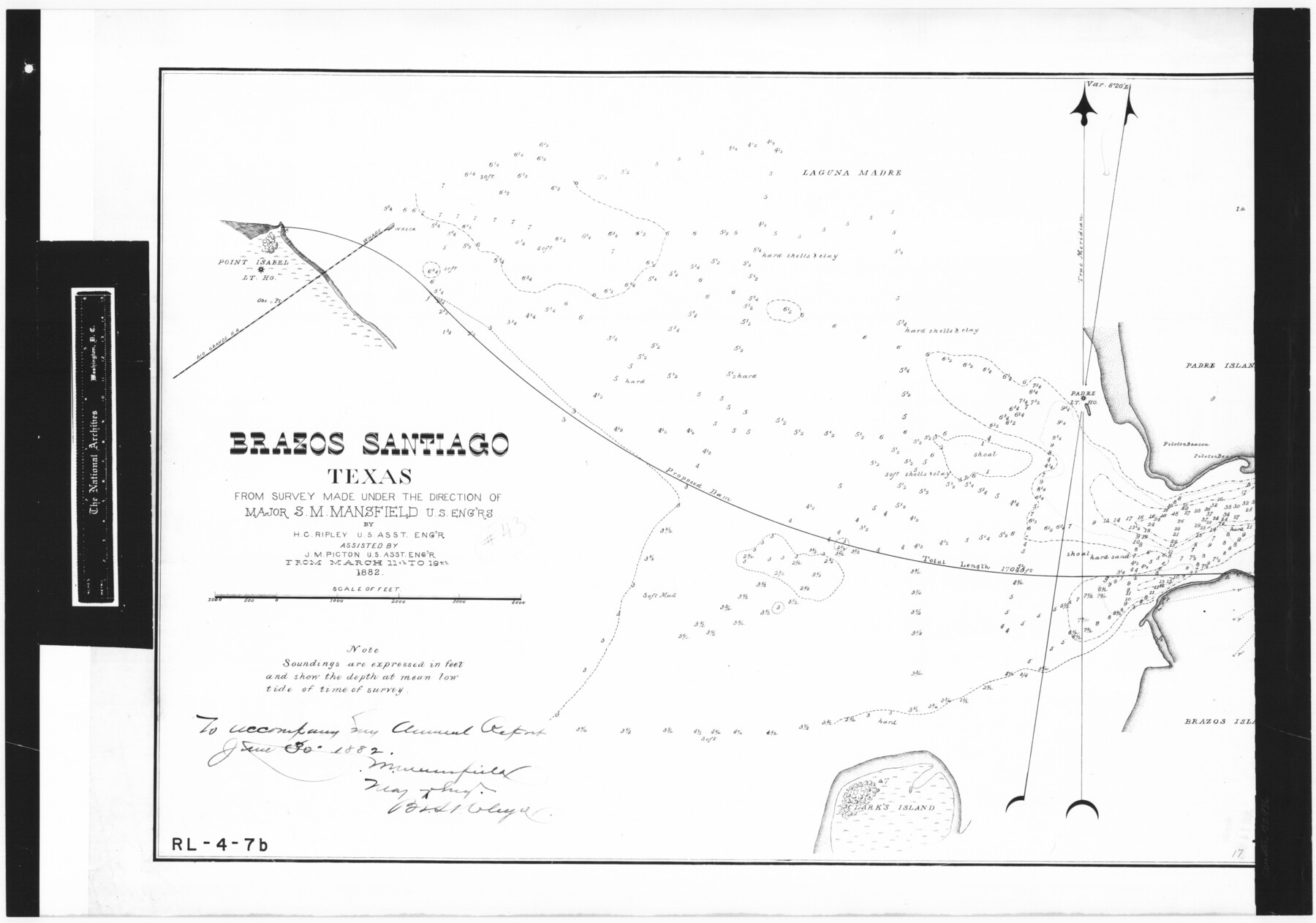
1850s The Rio Grande Trade Triangle

The Rio Grande Trade Triangle (1850s)

1. Brazos Santiago — The Ocean Gateway

In the early 1850s the Rio Grande economy revolved around a simple but powerful triangle. Ocean ships entered through Brazos Santiago, merchants handled the cargo at Brownsville and Matamoros, and mule trains carried the goods deep into northern Mexico to cities like Monterrey. At the center of this system stood Charles Stillman, quietly building the network that would later make him one of the most influential merchants on the frontier.

The Stillman letters quietly reveal something historians sometimes miss:

nearly all Rio Grande commerce in the early 1850s revolved around three geographic points.

Once you map them, you understand why Charles Stillman built his operations exactly where he did.

Image

Before deep-water ports existed in South Texas, Brazos Santiago Pass was the main entrance from the Gulf of Mexico.

Ocean-going vessels could not sail directly up the Rio Grande, so they:

  1. Anchored offshore at Brazos Santiago

  2. Offloaded cargo onto lighters or shallow-draft vessels

  3. Sent goods upriver to Brownsville and Matamoros

Image

This is why letters mention:

  • crossing the bar

  • storms near the mouth of the river

  • steamer transfers

Without Brazos Santiago, the entire trade system collapsed.

Image


2. Brownsville / Matamoros — The Commercial Hub

This twin-city zone became the financial and trading center of the region.

Here:

  • American merchants operated on the Brownsville side

  • Mexican merchants operated in Matamoros

Goods moved across the river constantly.

Merchants like Stillman handled:

  • import goods from the United States

  • export goods from Mexico

  • banking and credit

  • customs brokerage

  • freight forwarding

This is why so many letters in your collection are addressed simply to:

“Charles Stillman – Brownsville”

He was the node where everything passed through.


3. Monterrey — The Interior Market

Image

Monterrey was the largest commercial center in northern Mexico.

Merchants there purchased:

  • imported textiles

  • tools

  • manufactured goods

  • luxury items from Europe and the U.S.

But these goods reached Monterrey only through the Rio Grande route:

Ocean ships → Brazos Santiago → Brownsville/Matamoros → wagon trains → Monterrey.

Your Marín Pérez y Hermanos letter is a perfect example of this network in action.

Image


How the Triangle Worked

Think of it like this:

           MONTERREY
           (interior market)
                ▲
                │ mule trains / wagons
                │
BROWNSVILLE / MATAMOROS
 (merchant hub & finance)
                ▲
                │ river steamers / barges
                │
        BRAZOS SANTIAGO
        (ocean shipping)

Every shipment had to pass through all three points.


Why Brownsville Was Founded Exactly There

The location chosen by Stillman had three advantages:

1️⃣ Direct access to the Rio Grande navigation route
2️⃣ Close enough to Brazos Santiago for ocean trade
3️⃣ Positioned opposite Matamoros, Mexico’s existing commercial city

It was the perfect choke point for trade.


What the Stillman Letters Prove

Charles Stillman documents show each side of this triangle operating:

LetterNetwork shown
Phelps lettersGulf shipping and New Orleans trade
Felipe Peñaranch economy around Matamoros
Marín PérezMonterrey merchant remittances

Together they reveal the entire commercial ecosystem of the Rio Grande frontier.


What the letters and early records reveal is that Stillman’s dominance did not come from one shipment or one partnership. It came from one strategic decision he made right after the Mexican–American War.

That decision shaped the entire Rio Grande trade system.

When the Mexican–American War ended in 1848, the Rio Grande became an international border overnight. Many merchants stayed in Matamoros or moved to New Orleans. Charles Stillman chose a different strategy. He placed himself exactly where the two economies met. From that point forward nearly every shipment entering the Rio Grande trade triangle—by sea, river, or wagon—passed within reach of his warehouses in Brownsville.

The Decision That Made the Trade Triangle Work

(1848–1849)

After the war ended with the Treaty of Guadalupe Hidalgo, the Rio Grande suddenly became an international boundary.

Most merchants made one of two choices:

  • operate in Matamoros (Mexico)

  • operate in New Orleans (U.S. shipping center)

But Charles Stillman did something different.

He positioned himself exactly on the new border, at the site that became Brownsville.


Why This Was Brilliant

Stillman’s location allowed him to control all three flows of trade at once.

1️⃣ International trade (United States ↔ Mexico)

American goods:

  • textiles

  • tools

  • manufactured goods

arrived from New Orleans and were sold across the river in Matamoros and northern Mexico.

Mexican goods:

  • hides

  • silver

  • livestock

moved the opposite direction.

Because Stillman operated on the U.S. side, he controlled the American side of customs and finance.


2️⃣ River transport

Stillman placed his operations on the navigable section of the Rio Grande.

This allowed goods to move:

Brazos Santiago → river craft → Brownsville warehouses.

Merchants farther inland could not do this efficiently.


3️⃣ Cross-border finance

The 1850s letters posted tell us

Merchants in Monterrey and Matamoros:

  • remitted funds to Stillman

  • asked him to draw drafts

  • trusted him to negotiate payments

He essentially became a frontier banker.


The Overlooked Advantage

There was another factor that made this work.

Stillman arrived before a banking system existed in South Texas.

So merchants needed someone who could:

  • store specie

  • extend credit

  • handle drafts

  • pay freight

  • negotiate insurance

Stillman’s firm did all of this.


The Result

By the early 1850s Stillman had become the central commercial node in the region.

The triangle now worked like this:

Brazos Santiago → Brownsville → Monterrey

Every shipment passed through his orbit.

That’s why in many letters the address simply reads:

“Charles Stillman – Brownsville.”

No street.
No firm name.

Everyone in the trade network knew where that meant.


Why This Matters for Stillman Letters Series

Most popular history focuses on Stillman during the Civil War cotton trade.

But your letters show that the real story begins earlier.

By 1853, he already controlled:

  • shipping coordination

  • cross-border trade

  • financial remittances

  • ranch supply networks

The Civil War merely supercharged a system he had already built.

Long before cotton made Brownsville famous during the Civil War, three other commodities quietly sustained the Rio Grande trade. Tobacco from Kentucky, mule caravans from Texas ranch country, and hides from northern Mexico moved through Stillman’s warehouses year after year. These humble goods built the commercial network that later carried millions of dollars in cotton through the same frontier gateway.

The Three Commodities That Dominated Rio Grande Trade Before Cotton

1. Tobacco

One of the most surprising commodities in the early Stillman letters is tobacco.

Large quantities of tobacco moved through a chain that looked like this:

Kentucky → Mississippi River → New Orleans → Brazos Santiago → Brownsville / Matamoros → Monterrey and interior Mexico.

Why tobacco?

Northern Mexico had strong demand, and importing it through the Rio Grande was often cheaper than bringing it overland from Mexican ports.

The tobacco trade required:

  • ocean shipping

  • river transport

  • warehousing

  • cross-border credit

All services Stillman provided.

This trade helped establish his commercial network years before cotton profits appeared.

Several letters — particularly those written by J. H. Phelps — hint at the booming mule and horse trade.

2. Mules and Horses

These animals were essential for frontier commerce.

They powered:

  • freight wagons

  • pack trains into the Mexican interior

  • ranch operations

  • military logistics

Prices around $100 per mule were mentioned in the correspondence — a very substantial amount in the 1850s.

In many ways, the animal trade was the transportation infrastructure of the frontier economy.

Without mules, the Rio Grande trade triangle could not function.

3. Hides and Livestock Products

Ranchers on both sides of the Rio Grande produced large numbers of cattle.

Before the famous Texas cattle drives began, the most valuable export was often the hide rather than the meat.

Hides were used in the industrializing world to make:

  • leather goods

  • harness equipment

  • machinery belts

Merchants purchased hides from ranchers like Felipe Peña, consolidated them in border warehouses, and shipped them through Gulf ports.

This trade linked rural ranches to the international economy.


Why Cotton Later Took Over

By the late 1850s and especially during the Civil War, cotton exploded as the dominant commodity because:

  • southern ports were blockaded

  • Texas cotton could move through Mexico

  • European demand was enormous

But cotton did not create the trade network.

It simply flowed through a system that had already been built by earlier commodities.


What the Letters Really Show

The Stillman papers reveal an economy that depended on:

  • tobacco shipments from the United States

  • livestock and mule trade across Texas

  • hides and ranch products from northern Mexico

Together these trades created the financial and transportation networks that allowed Stillman to become the central merchant of the Rio Grande frontier.

1853 1209 Marín Pérez y Hermano to Charles Stillman

A short note from Monterrey dated December 9, 1853 reveals how deeply Charles Stillman’s business network had penetrated northern Mexico. The merchant firm Marín Pérez y Hermanos sent him more than three thousand pesos through a trusted courier, asking him to negotiate the funds through his commercial contacts. On the Rio Grande frontier, merchants like Stillman often served not only as traders—but as bankers for a vast cross-border economy.


📜 Letter / Remittance Note

Marín Pérez y Hermano → Charles Stillman
Monterrey, December 9, 1853

(Filed in the Stillman Papers as Felipe Pérez / Peres)


Clean Reading (normalized transcription)

Sr. Don Carlos Stillman
Monterrey, Dec. 9 de 1853

Muy Sr. nuestro y fino amigo:

Con el Sr. D. Juan Hambure remitimos a V. la cantidad de $3,578.61
(tres mil quinientos setenta y ocho pesos con sesenta y un centavos)

en efectos de seguros, esta cuya cantidad queda para que V. se sirva girar con sus apreciados amigos.

S.S.Q.B.S.M.

Marín Pérez y Hermano


Plain English Meaning

The merchant firm Marín Pérez y Hermanos writes to Stillman from Monterrey informing him that:

  • Through Juan Hambure, they are sending him
    $3,578.61 pesos

  • The funds are transferred in “efectos de seguros” (financial instruments related to insurance or insured drafts)

  • Stillman is asked to draw or negotiate the funds through his commercial contacts

Essentially:

They are remitting money to Stillman so he can handle the financial transaction on their behalf.


Why This Letter Is Important

Even though it is short, it reveals a lot about the Rio Grande trade system in 1853.


1️⃣ Monterrey merchants were using Stillman as a financial intermediary

Monterrey was a major commercial center of northern Mexico.

Instead of sending money directly to the United States or Europe, merchants often used trusted border merchants.

Stillman acted as a banker and financial agent.


2️⃣ Large sums were moving through Brownsville

The amount:

$3,578.61 pesos

That is a significant commercial transfer for the period.

In modern purchasing power it could represent tens or even hundreds of thousands of dollars in trade value.


3️⃣ Trade networks reached deep into Mexico

This letter shows the network stretching:

Monterrey → Matamoros → Brownsville → New Orleans

Goods moving along this chain included:

  • textiles

  • manufactured goods

  • tobacco

  • livestock

  • silver currency


4️⃣ The name “Juan Hambure”

This is likely Juan Hamburgo / Hambure, possibly a commercial courier or agent.

Frontier trade often relied on trusted carriers transporting drafts and documents.


Marín Pérez y Hermanos

Merchant firm — Monterrey

Commercial house operating in Monterrey and connected to cross-border trade networks linking northern Mexico to Brownsville. Their correspondence indicates that Charles Stillman sometimes acted as a financial intermediary handling drafts or remittances.


Juan Hambure

Commercial courier or agent

The individual entrusted to carry a financial remittance from Monterrey to Stillman. Merchants often relied on such trusted intermediaries to move funds and documents between cities.

When you step back and look at the letters together instead of one by one, something very interesting appears.
The Stillman papers are not just random correspondence — they reveal four overlapping economic systems operating at the same time along the Rio Grande in the early 1850s.

Once you see them, the entire frontier economy suddenly makes sense.


The Four Hidden Economic Networks in the Stillman Letters (1850–1855)

1. The River–Sea Transport Network

(Brazos Santiago → Rio Grande → New Orleans)

Your letters from J. H. Phelps describe something historians rarely explain clearly:
how freight actually moved.

Typical route:

  1. Ocean ships anchored off Brazos Santiago

  2. Cargo transferred to lighter vessels

  3. Freight taken upriver to Brownsville / Matamoros

  4. Bills and goods sent onward to New Orleans

This explains all the references to:

  • “crossing the bar

  • squalls and weather

  • steamer names like Cincinnati

Without this system, Stillman’s business could not exist.


2. The Mexican Interior Trade Network

(Monterrey → Matamoros → Brownsville)

The Monterrey letter from Marín Pérez y Hermanos shows a second system.

Merchants in northern Mexico relied on border houses like Stillman’s to:

  • receive remittances

  • negotiate drafts

  • import manufactured goods

Network example:

Monterrey merchants → courier → Matamoros → Charles Stillman

Stillman essentially functioned as a private frontier bank.


3. The Ranching Supply Network

(Texas & Tamaulipas ranches)

Letters like the one from Felipe Peña reveal a different economic layer.

Participants:

  • ranchers

  • mule traders

  • cattle suppliers

Typical transactions:

  • livestock

  • hides

  • horses

  • mule freight animals

The Phelps letter even hints at speculation in Texas stock raising:

mule prices around $100 each

That’s early evidence of the Texas cattle economy before the Civil War boom.


4. The Frontier Credit Network

(The most important system)

Almost every letter hints at this.

Stillman was constantly:

  • receiving funds

  • extending credit

  • holding money for others

  • negotiating drafts

Merchants across northern Mexico trusted him with thousands of pesos.

This is why figures like Marín Pérez y Hermanos send him money to “girar” (draw upon).

In modern terms, Stillman was acting as:

merchant + banker + freight forwarder + customs intermediary

all at once.


The Hidden Insight

Most people think Stillman became important during the Civil War cotton trade.

But your letters prove something else:

He had already built a functioning international trade network years earlier.

By 1853 he was already:

  • handling remittances from Monterrey

  • coordinating shipping through Brazos Santiago

  • financing ranch trade

  • acting as a commercial intermediary between two countries.

That infrastructure later allowed him to dominate the cotton trade during the Civil War.


The Real Frontier Economy

These letters show that the Rio Grande region wasn’t isolated at all.

It was part of a trade chain stretching from:

Northern Mexico → Brownsville → New Orleans → Atlantic trade

Few historians explain this system clearly, but the Stillman letters show it in real time.


One More Fascinating Detail

The correspondence also shows how personal these networks were.

People address Stillman as:

  • “muy señor nuestro y fino amigo”

  • “su amigo que lo aprecia”

Trust was everything.

There were no banks in the modern sense.

The entire frontier economy ran on reputation.

1853 Felipe Peña: A Rancher Writes from Matamoros

 This is a very nice piece of correspondence because it shows the Mexican side of the Rio Grande business network that surrounded Charles Stillman. The letter is short but historically valuable because it reveals everyday financial dealings between merchants and ranchers in the Matamoros region.


📜 Letter from Felipe Peña

Matamoros, September 4, 1853

Approximate transcription (modernized for readability)

Sr. Don Carlos Stillman

Muy Señor mío:

Le digo a V. que Ignacio se encuentra muy malo, por lo que respecta a la enfermedad, y por no esperar su dinero lo he estado aquí dentro de Matamoros, y ello lo harán a su hermano en todo el tiempo que se pueda disponer.

De aquí puede V. recibir de ella la cantidad de 362 pesos con 44 centavos, y quedo muy agradecido.

Mañana voy para el rancho y hoy mismo le escribiré si puedo mandar.

Su amigo que lo aprecia,

Felipe Peña


Plain English Summary

Felipe Peña writes to Charles Stillman from Matamoros explaining that:

  • A man named Ignacio is seriously ill.

  • Because of this illness and delays involving money, Peña has remained in Matamoros.

  • Stillman can collect 362 pesos and 44 centavos owed to him.

  • Peña plans to leave for his ranch the following day.

  • He promises to write again if he can arrange the payment.


Historical Value of This Letter

This little note reveals several useful insights about the 1850s Rio Grande economy.

1️⃣ Cross-border business was constant

Stillman in Brownsville was regularly dealing with people in Matamoros ranching networks.

Money, livestock, and credit moved across the river almost daily.


2️⃣ Ranch owners and merchants depended on each other

Peña mentions going “al rancho” (to the ranch), showing he was likely a stockman or rural landholder connected to the trade network supplying Stillman.


3️⃣ Mexican currency was still the working medium

The amount listed:

362 pesos 44 centavos

Mexican silver currency circulated widely on both sides of the Rio Grande.


4️⃣ Business could be delayed by illness or travel

The note shows how fragile frontier business could be.
If one person fell sick or left for the ranch, payments stalled.


Small Detail I Like

The tone is very polite and warm:

“Su amigo que lo aprecia”
Your friend who appreciates you

This shows Stillman had personal relationships with Mexican merchants and ranchers, not just formal business contacts.


Interesting Context

In 1853, the Rio Grande valley economy depended on:

  • cattle

  • hides

  • mule trade

  • tobacco shipments

  • imported manufactured goods

Men like Peña were the local ranching suppliers, while Stillman handled credit, shipping, and export networks.


Cast of Characters

The Stillman Papers (1850–1855)

Merchants, ranchers, lawyers, and frontier associates appearing in the correspondence of Charles Stillman


Charles Stillman

Merchant and founder of Brownsville

A Connecticut-born merchant who established himself on the Rio Grande following the Mexican–American War. Stillman became the central commercial figure of Brownsville, coordinating trade between:

  • New Orleans

  • Matamoros

  • Northern Mexico

  • Interior Texas

His business included freight forwarding, credit extension, cotton export, livestock transactions, and the import of manufactured goods.


Elizabeth Stillman

Wife of Charles Stillman

Elizabeth accompanied her husband during the early years of settlement on the Rio Grande frontier. Though rarely appearing directly in business letters, her presence is occasionally referenced in correspondence concerning travel, health, and domestic life during the early years of Brownsville.


J. H. Phelps

Merchant correspondent — New Orleans

A commercial associate who wrote several letters to Stillman in 1853 describing:

  • maritime travel to New Orleans

  • business conditions in the port

  • speculation about livestock ventures in Texas

Phelps appears to have been exploring the possibility of entering the Texas cattle or mule trade.


Felipe Peña

Rancher or regional associate — Matamoros area

Peña appears in a brief 1853 letter concerning a payment owed to Stillman. His correspondence suggests he operated from or near a ranch outside Matamoros and participated in the livestock or rural supply economy that supported cross-border commerce.


Ignacio (surname uncertain)

Associate mentioned in Peña correspondence

A man described as seriously ill in Peña’s letter of September 4, 1853. His illness delayed financial arrangements involving a payment owed to Stillman.


José Morell

Business associate

Morell appears in several Stillman letters connected to commercial operations and financial arrangements along the Rio Grande. He likely participated in the merchant network linking Brownsville and Matamoros.


Marks

Merchant associate

Referenced in letters dealing with business transactions and accounts. The surname appears in the network of merchants supplying goods and managing credit across the border region.


Avalos

Regional contact or supplier

Appears in correspondence connected with financial accounts and commercial matters in the Matamoros–Brownsville trade network.


Reynolds

Commercial associate

Mentioned in letters discussing trade activity and possibly freight or supply arrangements tied to Rio Grande commerce.


Basse & Hord

Legal or commercial firm

The firm appears in documents connected with litigation related to land claims in the Brownsville area, particularly matters involving the Cavazos family grant.


María Josefa Cavazos

Heir of Spanish land grant claims

A central figure in the complex land disputes surrounding the Cavazos grant, portions of which later overlapped with land occupied by Fort Brown and the emerging town of Brownsville.


Judge John Watrous

United States Federal Judge

Watrous presided over several important land claim cases in Texas during the mid-19th century. His rulings played a role in disputes involving the Cavazos family and other Spanish land grant claims.


The Frontier Network

Together these individuals represent the interlocking systems that created Brownsville’s early economy:

  • American merchants

  • Mexican ranchers

  • Gulf Coast shipping agents

  • Lawyers handling land claims

  • Investors speculating in livestock and trade

Through their letters we see a frontier town slowly transforming into a commercial gateway between the United States and Mexico.


1853 Letter — J. H. Phelps to Charles Stillman

1853 Letter — J. H. Phelps to Charles Stillman

In June of 1853, a New Orleans merchant named J. H. Phelps wrote two long letters to Charles Stillman describing the restless economic energy of the Gulf frontier.

Phelps had just arrived after a difficult voyage across the bar at the mouth of the Mississippi, where squalls and heavy winds shook the steamer carrying families, merchants, and freight into the great port. Once safely ashore, he turned his attention to business matters—and to Texas.

Stillman had apparently suggested that stock raising might prove profitable on the frontier. Phelps agreed that it might suit a man of capital, though he confessed he lacked the funds to attempt such an enterprise himself. Mule prices were already climbing, and he hoped a modest trade in horses and mules might support him. If prospects improved, he wrote, he might soon travel west to Texas, perhaps even toward Corpus Christi, where many believed the next frontier of opportunity was forming.


(New Orleans, June 16 and June 29, 1853)

Quick readable transcription summary

June 16, 1853 — New Orleans

Phelps writes to Stillman describing his recent sea voyage into New Orleans.

He recounts:

  • Leaving on a yacht and transferring to the steamer Cincinnati

  • Crossing the bar at the mouth of the Mississippi

  • Experiencing squalls and heavy blowing winds

  • Traveling with women and children aboard

  • Finally arriving safely in New Orleans

He notes that Mrs. C. and Frank have taken rooms at the City Hotel while family members are busy with household matters and shopping.

Phelps tells Stillman that he will remain in New Orleans for a short time while arranging matters.

He mentions that a certain old servant acquaintance delayed him a few days.


June 29, 1853 — New Orleans

This second letter is more revealing about Texas economic expectations.

Phelps responds to a comment from Stillman suggesting that stock raising in Texas might be profitable.

He explains:

  • A stock farm in Texas might suit a wealthy man like Stillman

  • But it would require more capital than he possesses

  • He has been examining horses and mules

  • Mule prices near the Brazos are around $100 each

  • He hopes to sell some animals profitably

Phelps says he may soon travel to Texas to investigate opportunities.

He writes that he hopes his “little stock business will make me a living through my industrious operations.”

He also comments that:

  • Commercial business in New Orleans is slow

  • Many people are moving into Texas stock raising

  • The region near Corpus Christi may offer opportunities


Historical Insights from the Letters

These two letters reveal several fascinating aspects of border commerce in 1853.

1️⃣ Travel was difficult and uncertain

The Mississippi delta was dangerous.

Phelps describes:

  • crossing the bar

  • violent squalls

  • crowded ships

These journeys were routine for merchants supplying the Rio Grande trade.


2️⃣ Texas ranching was already attracting investors

By 1853 many businessmen were considering cattle and mule enterprises in Texas.

Phelps writes that stock raising might be ideal for Stillman.

This is important because it shows that the Texas livestock boom began earlier than most people realize.


3️⃣ The mule trade was booming

Mules were essential for:

  • freight transport

  • military supply

  • trade caravans into Mexico

Phelps notes prices around $100 per mule, a very substantial sum in 1853.


4️⃣ Many merchants were reconsidering New Orleans

Phelps suggests New Orleans commerce had slowed.

Meanwhile Texas seemed full of opportunity.

This shift reflects the economic gravity gradually moving westward after the Mexican War.


One particularly interesting line

This sentence is wonderful historically:

“A Texas stock raising business with a little residence in New Orleans would seem to me to be the very ideal of human affection.”

It captures the dream of many merchants:

Money made in Texas — life enjoyed in New Orleans.


One more interesting detail

The envelope shows a New Orleans postmark (June 1853) and is addressed to:

Charles Stillman
Brownsville
Texas

Which tells us something important:

By 1853 Stillman was already well known enough to receive letters simply addressed to Brownsville.


A Tight Tobacco Market: The Final Letters from Price, Walsh & Co. from 1853.

The Final 1853 Letter from Price, Walsh & Co.

New Orleans, November 4, 1853

The final surviving letter in this group of correspondence from Price, Walsh & Co. of New Orleans is dated November 4, 1853. Written to Charles Stillman & Brother in Brownsville, it reflects a tobacco market that had grown increasingly tight during the year.

The letter opens by acknowledging Stillman’s recent communication and expressing satisfaction that he had been successfully reducing his tobacco inventory.

This is a revealing detail. Earlier letters from the same firm had warned that tobacco supplies were tightening, and that prices might soon rise. By the autumn of 1853, that prediction had largely come true.


The Price of Tobacco

Price, Walsh report that the market in New Orleans was currently paying about:

$8½ per bale for roughly 150 bales of tobacco

which they describe as the best tobacco then available.

The firm explains that they had 50 bales ready for shipment, but caution that tobacco suitable for the Rio Grande trade remained difficult to obtain.

Their concern is evident in the letter:

the merchants were carefully watching shipments in order to ensure that their customers would not suffer from shortages.

The tone suggests that tobacco was becoming a scarcer and more valuable commodity, confirming the rising market described in earlier correspondence from the same year.


Guarding Stillman’s Reputation

The merchants also stress that they had been extremely selective about the tobacco they purchased.

They explain that they refused to ship inferior tobacco simply to fill orders, writing that they did not wish to send goods that might damage Stillman’s reputation in the Rio Grande market.

This remark reinforces what earlier letters suggested:

Stillman had built a reputation for selling high-quality tobacco, and his New Orleans suppliers were conscious of maintaining that standard.


A Difficult Market

The letter concludes with a cautious note about the coming months. The merchants warn that the tobacco crop had not yet recovered, and they see little prospect for lower prices in the near future.

For merchants operating along the Rio Grande frontier, such fluctuations could have significant consequences. Tobacco was a reliable retail commodity, and shortages could disrupt trade throughout the region.


The End of a Correspondence for 1853

With this letter, the Price, Walsh correspondence in the surviving Stillman papers comes to a close.

Taken together, the letters from 1852–1853 provide an unusually clear picture of how the Rio Grande trade functioned:

  • New Orleans merchants sourced tobacco from the American interior

  • shipments moved south by sea to the Texas coast

  • frontier merchants like Charles Stillman distributed the goods through Brownsville and Matamoros into northern Mexico

Through these letters we can see not just the movement of goods, but the constant negotiation of supply, quality, and price that shaped the commerce of the borderlands.


1852 - 1853 Price, Walsh & Co. and the Tobacco Trade

Letters from New Orleans

Price, Walsh & Co. and the Tobacco Trade — 1852–1853

Among the correspondence preserved in the Charles Stillman papers are several letters from Price, Walsh & Co., commission merchants in New Orleans, written between January and December 1852 and filed together by Stillman.

Though brief and routine, these letters illuminate the commercial pipeline connecting the Mississippi Valley with the Rio Grande frontier.

They show how merchants in New Orleans supplied tobacco and other goods to Stillman’s store in Brownsville — which then redistributed them throughout northern Mexico.


The Role of Price, Walsh & Co.

Price, Walsh & Co. acted as commission agents and brokers in New Orleans.

Their job was to:

• purchase tobacco in the Mississippi Valley
• store it in New Orleans warehouses
• ship it to clients like Stillman
• provide market intelligence about price fluctuations

In the mid-19th century New Orleans functioned as the great commercial clearinghouse of the American South, connecting river trade with international shipping.

For merchants on the Rio Grande, it was the nearest major supply center.


What the Letters Discuss

Across the group of letters several themes appear repeatedly.

1. Tobacco shipments

The correspondence frequently references shipments of Kentucky tobacco, packed in bales and shipped south through New Orleans.

Tobacco was a steady commodity for the Rio Grande market.

It could be sold:

• locally in Texas
• in Matamoros
• throughout northern Mexico via mule trains


2. Market prices and competition

Price & Walsh regularly advised Stillman about changing tobacco prices.

One letter warns that:

inferior tobacco had been sold as low as six dollars per bale

But they caution that cheaper tobacco often caused complaints and loss of trade, encouraging Stillman to maintain quality rather than chase the lowest price.

Such advice shows how commission merchants served as market advisors, not just shipping agents.


3. Cigars and luxury goods

The letters also mention:

Havana cigars
• imitation Havana cigars
• cigar dealers in New Orleans

This suggests that the Rio Grande trade did not deal only in frontier necessities.

Even on the distant border, merchants handled luxury consumer goods.


4. Shipping and accounts

Some letters include account statements or references to freight charges.

Typical expenses included:

• ocean or coastal shipping
• handling and storage
• commissions
• insurance
• forwarding charges

Stillman’s firm would settle these balances through drafts or credit arrangements.


The Communication Rhythm of Trade

One striking feature of the correspondence is how methodical Stillman was in organizing his papers.

He folded each letter and labeled it with brief notes such as:

  • sender

  • date received

  • date answered

This filing practice created a paper trail of commercial decision-making, allowing Stillman to track shipments, payments, and negotiations across months or even years.

Interestingly, later Rio Grande merchant Francisco Yturria used the same filing method — very likely learned during his early years working in the Stillman trading network.


The Rio Grande in a Continental Trade System

These letters remind us that the Rio Grande frontier was not isolated.

Instead, it was part of a continental supply chain:

Kentucky tobacco farms

Mississippi River steamboats

New Orleans warehouses

Gulf schooners

Brownsville merchants

mule caravans into Mexico

In this system, a bale of tobacco grown hundreds of miles away could eventually reach a shop in Monterrey, Saltillo, or even Chihuahua.


What Makes These Letters Valuable

Individually, these letters seem routine.

But together they reveal:

• the daily mechanics of frontier commerce
• the network linking Brownsville to New Orleans
• how merchants balanced price, quality, and reputation

They also illustrate how Charles Stillman operated not simply as a local storekeeper, but as a node in a vast trading system spanning the Mississippi Valley and northern Mexico.


1852 04 Price, Walsh & Co. - Reputation and Frontier Commerce


These April 1852 letters from Price, Walsh & Co. are excellent because they reveal something historians often miss: quality competition in the Rio Grande tobacco trade. They also show how carefully Stillman monitored accounts and shipments. 


Letter 1

Price, Walsh & Co.

New Orleans — April 7, 1852

Transcription (reconstructed)

Gentlemen,

In the above we send duplicate copy of the 5th and which we trust is the Brownsville.

Since then we have nothing to report but to return thanks for an order received today from one of the commission houses here for 75 bales, and stated to be by your kind recommendation of us.

We are much obliged.

And are gentlemen,

Very truly yours,
Price Walsh & Co.


Letter 2

Price, Walsh & Co.

New Orleans — April 5, 1852

Transcription (reconstructed)

Messrs. Charles Stillman & Co.

To Price Walsh & Co.

Feby 24 — To sales invoice ........ $1136.50

Mar 31 — By cash allowance ........ $47.04

Balance to your favor ........ $9.36

Gentlemen,

Above we furnish statement of account showing $9.36 to your favor in reply to your favor of the 12th ult.

We feel satisfied that no one in your market can undersell you otherwise than by offering an article considerably inferior to the tobacco which you have at present.

We are well aware that many buyers have been here and have supplied themselves with inferior tobacco, some of which we have sold as low as $6 per bale.

But in the long run we consider this a bad policy, and generally attended with complaints and loss of trade to the parties who supply themselves with such tobacco.

Your instructions have always been to send you a good article, and we have endeavored to comply with them.

We remain gentlemen,

Your very truly,
Price Walsh & Co.

What These Letters Reveal

These letters add several important pieces to the story.

1. Stillman's Reputation in the New Orleans Market

The April 7 letter states clearly:

an order received today from a commission house here for 75 bales, by your recommendation

That means Stillman was actively referring business to suppliers in New Orleans.

In other words, he was functioning as a regional trade broker, not just a storekeeper.


2. A Tobacco Quality War

Price & Walsh complain that other buyers are purchasing inferior tobacco at $6 per bale.

That is extremely cheap.

They warn that low-quality tobacco causes:

• complaints
• loss of reputation
• lost customers

This shows that merchants along the Rio Grande competed not only on price but also on product reputation.


3. Stillman's Business Strategy

The most revealing line:

“Your instructions have always been to send you a good article.”

This confirms Stillman’s business model:

He preferred quality goods rather than the cheapest possible imports.

That approach probably helped him dominate the Rio Grande trade.

Price, Walsh & Co., April 1852

Two letters from the New Orleans firm of Price, Walsh & Company in April 1852 reveal an important aspect of frontier commerce: reputation.

By this time large quantities of tobacco were being shipped toward the Rio Grande, and merchants competed aggressively to supply the trade. Some dealers were selling tobacco for as little as six dollars per bale, but Price & Walsh warned that such bargains often meant inferior goods.

Low-quality tobacco, they wrote, usually led to complaints and the eventual loss of customers.

Charles Stillman appears to have taken a different approach. His suppliers noted that his standing instructions were always to send “a good article.” Maintaining that standard, even at higher cost, helped establish the reliability of the goods sold through his Brownsville firm.

The letters also show that Stillman’s influence extended beyond his own business. Price & Walsh thanked him for recommending them to another commission house in New Orleans that had just placed an order for seventy-five bales of tobacco.

Even in routine correspondence, the documents reveal the growing commercial network that linked Brownsville, New Orleans, and markets deep into northern Mexico.


One More Fascinating Detail

Notice the phrase:

“many buyers have been here”

This suggests that Rio Grande merchants were traveling to New Orleans personally to buy tobacco.

That means Brownsville traders were already part of the larger Gulf commercial circuit, moving between:

New Orleans
Matamoros
Brownsville
Monterrey
San Luis Potosí

Exactly the trade system this series is uncovering.


1852 0113 Price, Walsh & Co. to Charles Stillman

Transcription

(Price, Walsh & Co. to Charles Stillman — January 13, 1852)

New Orleans
13th January 1852

Messrs. Stillman & Partners
Gentlemen,

Enclosed you will find bill of lading for 150 bales and 30 half bales of leaf Kentucky tobacco.
We also forwarded duplicate by this day’s mail.

Mr. Hugh Witherell & Co. have paid the balance $1014.48 on your account.

Do you do anything in cigars, or would they be worth your attention?
We are left by cigar dealers from time to time large parcels to dispose of.

If you direct us we will forward you a small parcel of the different sorts at prices that we think will pay you.

Havana Regalias from $20 to $30 per thousand
Small size do. $20

and imitation Havanas, a very good looking cigar for sale — Regalias @ $15 per thousand

Yours truly,

Price Walsh & Co.


Tobacco and Cigars for the Rio Grande

Price, Walsh & Co., New Orleans — January 13, 1852

Only five days after confirming a shipment of tobacco to Brownsville, the New Orleans firm of Price, Walsh & Company wrote again to Charles Stillman.

This time they enclosed the bill of lading for 150 bales and 30 half-bales of Kentucky leaf tobacco, which had already been dispatched toward the Rio Grande.

The letter also reveals that the firm was attempting to expand the trade. Price & Walsh asked Stillman whether he dealt in cigars, offering to send a trial shipment of several varieties.

Prices ranged from $20 to $30 per thousand for Havana cigars, while “imitation Havanas”—likely American-made cigars styled after Cuban brands—could be supplied for $15 per thousand.

Such correspondence illustrates how merchants along the Gulf Coast constantly tested new products in frontier markets. Tobacco remained a staple commodity in northern Mexico, and traders along the Rio Grande watched carefully for any opportunity to expand the trade.


What This Letter Reveals

This short letter gives us several insights into the Rio Grande trade network.


1. Kentucky Tobacco for the Rio Grande

The shipment confirms that the tobacco supplied earlier was:

Kentucky leaf tobacco

Kentucky tobacco was a major export commodity shipped through New Orleans, then redistributed to Gulf markets like Brownsville.

This tells us the supply chain likely looked like:

Kentucky farms
→ Mississippi River
→ New Orleans wholesalers
→ coastal shipping
→ Brownsville
→ Mexican interior markets


2. Early Cigar Import Market

Price & Walsh are clearly testing the waters:

“Do you do anything in cigars?”

They offer Stillman:

Havana cigars

  • $20–$30 per thousand

Imitation Havanas

  • $15 per thousand

This suggests they believed the Rio Grande market might support cigar sales, but they were unsure whether Stillman already dealt in them.


3. Merchant Credit Clearing

The line:

“Hugh Witherell & Co. have paid the balance $1014.48 on your account”

shows how accounts were constantly being settled through intermediaries.

This reinforces the point that frontier trade was a credit-based network, not simple cash transactions.


One Small Detail of Interest

Stillman carefully wrote on the folded letter:

“Rec’d 28 — Ans’d Feb 11”

That simple notation shows the rhythm of frontier commerce:

Letters could take two weeks or more to reach Brownsville from New Orleans, and replies moved just as slowly back through the same routes.

Yet through this steady exchange of letters, invoices, and accounts, merchants like Stillman built the commercial networks that sustained the Rio Grande frontier.


1852 0108 Tobacco for the Rio Grande - Price, Walsh & Co

Transcription

(Price, Walsh & Co. to Charles Stillman — January 8, 1852)

Gulf Port

In due receipt of yours of the 22nd ult., and agreeably with instructions to furnish you with 150 bales and 30 half bales leaf, we ship them this day by Alderman.

We are much gratified at the confidence you place in us, and you may rest assured your orders shall at all times have our best attention as to the quality of the article we will ship you and at the very lowest figure that it can be purchased in our market.

Within the past few weeks several of the dealers in tobacco for the Rio Grande have been in this market, one of whom a Mr. Graham has taken some 200 bales and 60 hhds.

We do not hesitate to state that no parcels of tobacco shipped to Texas will come up to your lot.

We called on Mr. Hugh Witherell to say he has orders for dispatch of your hides.

We are gentlemen,

Your very truly,

Price Walsh & Co.


The Brief Tobacco Invoice Note

The small notation sheet reads:

1852

Price Walsh & Co.
Jan. 8 Invoice
ans. Jan. 24

Invoice of Tobacco

This appears to be Stillman's filing notation, indicating:

• date received
• date answered
• contents of the letter

Merchants frequently wrote these summaries on the back or cover sheet before filing the correspondence.


What This Letter Reveals

Although brief, it tells us several important things about the Stillman trade network.

1. Tobacco Was a Major Rio Grande Import

Leaf tobacco was shipped in:

  • bales

  • half-bales

  • hogsheads (hhds.)

It was then resold across the border into northern Mexico.

Demand for tobacco was extremely strong in Mexican markets.


2. Competing Merchants Were Buying in the Same Market

The mention of a Mr. Graham purchasing 200 bales and 60 hogsheads tells us that several merchants were buying tobacco specifically for the Rio Grande trade.

This confirms that by 1852 there was already a recognized export market supplying Brownsville and the Mexican interior.


3. Tobacco Traveled the Same Route as Hides

Note the line about orders for dispatch of your hides.

This shows the two-way trade system:

Northbound to the U.S.

  • hides

  • wool

  • silver

Southbound into Mexico

  • tobacco

  • manufactured goods

  • textiles

  • hardware

Exactly the trade system you’ve been documenting.


Tobacco for the Rio Grande

Price, Walsh & Co. to Charles Stillman — January 8, 1852

Among the many letters preserved in the Stillman Papers are routine business communications that, though brief, reveal the mechanics of frontier commerce.

On January 8, 1852, the firm of Price, Walsh & Company wrote to Charles Stillman confirming shipment of 150 bales and 30 half bales of leaf tobacco destined for the Rio Grande market.

The tobacco was sent by a vessel named Alderman, part of the steady coastal traffic that supplied Brownsville merchants with goods for resale across the border into Mexico.

The letter also shows that Stillman was competing with other traders supplying the same market. One dealer mentioned in the letter had recently purchased 200 bales and 60 hogsheads of tobacco for the Rio Grande trade.

Tobacco was one of the staple commodities flowing south into Mexico, where it was in constant demand. In return, frontier merchants like Stillman shipped hides and other raw materials north to American markets, forming a commercial circuit that tied the Rio Grande frontier to ports across the Gulf of Mexico.

Even a short invoice letter like this one illustrates the scale and organization of the trade network that Stillman helped build along the border.


2026/03/05

1852 0301 James Jewitt - A Partner in the Stillman Network

Transcription (Best Reconstruction)

Brownsville, March 12th, 1852

Dear Sir,

I am in receipt of your esteemed favors of January 28 and February 10th, which have been received with pleasure, and it is evident your health is improving. I was really fearful of the effects of the cold weather you had passed through. I write in continuation to be prudent.

Your anticipations respecting my sympathy for the revolution are correct, and by many it is believed that I am engaged in it. It has not cost me a dollar, but I have served friends in it who are largely in my debt, but I almost think that I shall lose a dollar by them whether they succeed or not in the revolution.

It however prevents them from receiving their funds from the interior unless they send it direct to the port and pay the duties and expenses, which is rarely done.

The revolution has been a great benefit to our trade. At the commencement there was at least a million dollars worth of goods pent up here, and the bonds on the goods must be refunded.

The commander-in-chief was obliged to raise funds to do it. He reduced the tariff by secret instructions from Arista and allowed prohibited goods to be introduced. The emperor, when they learned it, approved it and allowed the goods to be introduced to Veracruz and Tampico where the prohibited goods were deposited.

The duties were expected from the interior but Carvajal’s late success at Camargo has changed the affairs.


(page 2)

The treaty of peace allows the introduction to any part of Mexico and no doubt there will be more favorable instructions to the customs houses than at this moment.

I do not intend to avail myself of it but shall continue my trade to a few friends and my customers confined strictly.

I see nothing to prevent me from carrying trade on as usual, except perhaps some hesitation from those who owe me money.


(page 3 – legal land issue)

Respecting the Brownsville sheet of property, it has been an annoying affair, wished to be settled.

The lines are pulled at different quarters. There were four titles to the property all confused — two granted by the City of Matamoros, old Spanish title, Texas location, and the legislative grant to the City of Brownsville.

Much money has been spent to repeal the act of corporation but it has not been done.

The charter expired last night — we think it void.

The labor lots were owned by some 120 of them — the most valuable.

Suit was commenced against us to defend possession and we had to defend the balance.


(final page – personal closing)

My wife joins me in kind regards.

Give my respects to Mrs. Stillman and the children.

We remain your obedient servant,

James Jewitt


Interpretation

This letter is remarkable because it reveals three major frontier realities at once.

1. The Carvajal Revolution and Trade

Jewitt openly admits something most merchants never wrote plainly:

The revolution helped business.

Because the fighting disrupted Mexican customs enforcement, goods piled up on the Texas side of the river, creating opportunities for traders.

He even explains how Mexican officials temporarily:

• lowered tariffs
• allowed prohibited imports
• quietly tolerated smuggling

to raise money for their armies.

That is an extraordinary admission.


2. Frontier Trade Credit

Jewitt also reveals a classic problem of Rio Grande commerce:

people owed him money.

He says plainly:

“friends in the revolution are largely in my debt.”

That means traders often financed entire shipments on credit, waiting months or years to be paid after goods were sold deep inside Mexico.

The political instability threatened repayment.


3. Brownsville Land Title Chaos

This is perhaps the most historically important passage.

Jewitt describes the Brownsville land dispute, where ownership claims overlapped:

• Spanish grants
• Matamoros municipal grants
• Texas headright claims
• Brownsville city grants

He writes that:

“four titles to the property all confused.”

This is exactly the land title confusion that haunted Brownsville for decades.


Why This Letter Matters

This document gives us a rare window into frontier economics.

In a single letter we see:

• Mexican civil war
• smuggling networks
• tariff manipulation
• merchant credit systems
• and Texas land litigation

All intersecting in Brownsville in 1852.

That is precisely the world Charles Stillman operated in.

One More Extraordinary Line

This sentence is pure frontier honesty:

“The revolution has been a great benefit to our trade.”

That line alone tells readers something many histories avoid saying plainly:

Chaos on the frontier often meant profit.


James Jewitt

A Forgotten Partner in the Stillman Network

In the early years of the Rio Grande frontier, commerce depended not only on bold merchants and steamboats but also on a quiet web of trusted associates scattered along the river. Among these lesser-known figures was James Jewitt, a man whose surviving letters reveal him to have been one of Charles Stillman’s closest commercial correspondents during the early 1850s.

Although Jewitt never achieved the fame of men such as Charles Stillman or the great ranching figures who followed, the documentary record shows that he occupied an important position within the informal trade network that connected Brownsville, Roma, and the interior of Mexico.


A Merchant on the Frontier

By 1852 Jewitt was living and working in Brownsville, Texas, a rapidly growing border town that had become the principal American gateway for trade with northeastern Mexico. The region’s economy revolved around river traffic, wagon caravans, and credit-based commerce extending hundreds of miles inland.

Like many frontier merchants, Jewitt operated within a system built on trust and long-distance credit. Goods imported through the Rio Grande were often advanced to Mexican traders months before payment could be collected. Letters between merchants therefore functioned as business reports, intelligence briefings, and financial ledgers all at once.

Jewitt’s correspondence with Stillman reflects exactly this role. In his letters he discusses:

  • debts owed by merchants in the interior of Mexico

  • customs duties and tariff policies

  • shipments of goods moving through the Rio Grande trade corridor

  • the political instability affecting commerce along the border

Such reports were essential for Stillman, whose firm depended on reliable information from partners positioned throughout the region.


Trade in a Time of Revolution

One of Jewitt’s surviving letters, written from Brownsville in March 1852, gives a striking description of how frontier merchants navigated political upheaval. During the uprising led by José María Jesús Carvajal, customs regulations shifted rapidly and military leaders altered tariffs to raise funds for their campaigns.

Jewitt observed candidly that the turmoil actually stimulated trade, noting that large quantities of goods accumulated along the Rio Grande while Mexican officials quietly permitted certain imports that had previously been restricted. His remarks illustrate the complicated reality of frontier commerce, where political instability could simultaneously threaten merchants and create new opportunities.


The Brownsville Land Controversies

Jewitt’s letters also shed light on another major issue facing early residents of Brownsville: conflicting land claims. In one passage he complains that the city’s property titles were “all confused,” referring to the overlapping authorities that governed the region during the transition from Spanish and Mexican rule to the Republic and later the State of Texas.

Ownership could be claimed under several competing systems:

  • old Spanish colonial grants

  • municipal titles issued by Matamoros

  • Texas headright locations

  • later grants tied to the incorporation of Brownsville

Jewitt’s frustration reflects the legal uncertainty that plagued many early settlers and investors.


A Personal Connection to the Stillman Family

The warmth of Jewitt’s letters suggests that his relationship with Stillman went beyond routine business correspondence. He closes one letter by sending regards to Mrs. Stillman and the children, indicating familiarity with the family itself.

Family historians have long speculated that Stillman’s son, James Stillman, may have been named in honor of Jewitt. While documentary proof remains elusive, such naming practices were common among nineteenth-century merchant families, especially when honoring trusted partners or close friends.


A Quiet Figure in a Larger Story

James Jewitt left few traces in the broader historical record. He was not a politician, a military commander, or a public figure. Yet the surviving correspondence shows that he played a practical role in sustaining the commercial machinery that made the Rio Grande frontier function.

Men like Jewitt handled the daily realities of trade—
tracking debts, reporting political developments, and helping merchants like Stillman navigate the volatile world of border commerce.

Through these letters we glimpse the quieter side of frontier enterprise: the network of trusted associates whose information and judgment kept the wheels of trade turning along the Rio Grande.


1852 July - Roma, Texas - Charles Nimmons Writes to Charles Stillman

A Merchant’s Troubles on the Rio Grande

Charles Nimmons Writes to Charles Stillman, July 1852

In July of 1852, Charles Nimmons, writing from the river town of Roma, Texas, sent Charles Stillman a detailed letter describing the state of several accounts and the difficulties of collecting money owed in the frontier trade.

His message reveals the constant financial juggling required to keep commerce moving along the Rio Grande.


The Immediate Issue: Money in Transit

Nimmons begins by explaining that two bags of money totaling about $300 had been placed in the care of Comanche, likely the steamboat operating on the Rio Grande.

This money represented proceeds from sales belonging partly to S. H. Harris, another merchant involved in the network.

But Nimmons immediately explains a problem familiar to every frontier trader:

the proceeds were less than expected.

He lists the purchasers and amounts paid.

Among them:

  • Thos. Cash

  • Alexander Hays

  • Simpson

  • John Charles

  • John Vale

  • John Lund

  • Welch

The total collected was $976.56, but the expected returns fell short.


The Sheriff Problem

One of the most revealing passages concerns a local official.

Nimmons writes bluntly:

“The Sheriff has received for his services $8.25 which is too much & I think he is a d— rascal.”

This small comment tells us a great deal.

On the frontier, legal enforcement of debts often required involving the county sheriff, who would serve papers, seize property, or enforce collections. But such services could easily turn into abuses or inflated fees, especially in remote areas where oversight was minimal.

Nimmons clearly believed the sheriff had taken advantage of the situation.


Collecting Debts Across the Valley

Another difficulty was simply locating debtors.

Nimmons explains that he had tried repeatedly to settle accounts but could not always find the men responsible.

He planned to travel to Cerralvo in Nuevo León to attempt collection there.

This detail again reveals how commerce worked:

Merchants on the Texas side were constantly dealing with customers scattered across northern Mexico and the Rio Grande settlements, often requiring personal travel to settle accounts.


A Frontier Cast of Characters

The letter also provides a glimpse of the people circulating through the valley.

Nimmons notes that Doña Josefa was traveling through the area with a son described as:

“a big fellow as big as life.”

He adds that Don Carlos was acting as the man responsible for her affairs.

These passing references remind us that the trade route was not just wagons and ledgers. It was a constant flow of families, travelers, traders, and intermediaries moving between Texas and Mexico.


A Hint of Smuggling

One intriguing line suggests another layer of frontier activity.

Nimmons mentions that he had obtained four cargo carts for Stillman’s merchandise.

The phrasing hints that these carts may have been used to move goods quietly across the border, a practice that was extremely common in the Rio Grande trade where tariffs and customs rules were often circumvented.


The Final Accounting

At the end of the letter Nimmons includes a rough financial summary:

  • Cash received

  • Charges by Simmons & Co.

  • Additional fees and expenses

  • Sheriff’s bill

The remaining balance comes to $1010.89, showing how carefully these merchants tracked every dollar even in such chaotic circumstances.


Why This Letter Matters

The Nimmons letter shows the less glamorous side of frontier commerce.

Behind the great trading houses and wagon trains were constant struggles:

  • collecting debts

  • chasing down customers

  • dealing with corrupt officials

  • transporting money safely

  • settling accounts across two countries

Without men like Nimmons handling these everyday problems, the commercial empire of Charles Stillman & Co. could not have functioned.


Roma, Texas

The Forgotten Trade Town of the Rio Grande

Long before railroads reached South Texas, the river town of Roma was one of the most important commercial outposts along the Rio Grande.

In the early 1850s—when Charles Stillman and other merchants were building trade networks between Texas and northern Mexico—Roma served as a strategic middle point between Brownsville and the interior frontier settlements.

Today it is quiet and often overlooked. But in its day, Roma was a busy river port, trading depot, and legal center for the upper Rio Grande valley.


A River Port in the Frontier Economy

Roma sits on a natural bend of the Rio Grande about 60 miles upriver from Brownsville.

During the mid-19th century this location made it ideal for trade:

  • river steamers could navigate to Roma

  • wagon roads connected it to ranching districts

  • Mexican settlements lay just across the river

Merchants moving goods inland often stopped here to redistribute cargo or settle accounts before continuing farther upriver.

The town effectively became a commercial checkpoint in the river trade.


A Town of Merchants and Warehouses

By the 1850s Roma had developed into a thriving mercantile community.

Large stone buildings along the riverfront housed:

  • dry goods stores

  • warehouses

  • commission merchants

  • shipping agents

From these buildings goods were transferred between riverboats, mule trains, and freight wagons.

Many of the handsome limestone structures still standing in Roma today date from this golden age of commerce.


The Cross-Border Marketplace

Roma’s importance also came from its location directly across from Ciudad Miguel Alemán’s predecessor settlements in Tamaulipas.

Trade across the river was constant.

Merchants and ranchers crossed daily to:

  • buy manufactured goods

  • sell hides, livestock, and wool

  • settle debts

  • exchange currency

In practice, the river was less a barrier than a commercial highway.


Steamboats on the Rio Grande

During this period, river steamers regularly traveled between Brownsville and Roma.

These vessels carried:

  • passengers

  • merchandise

  • bags of coin and banknotes

  • letters between merchants

When Charles Nimmons writes that money was placed on a boat such as the Comanche, he is describing the normal system used to move funds safely along the river.

Roma functioned as one of the upper river terminals for this traffic.


Law, Debt, and Frontier Justice

Roma was also the county seat of Starr County, making it a center of legal authority in the region.

Sheriffs, courts, and lawyers operated there, which explains why letters like the one from Charles Nimmons frequently mention:

  • sheriffs collecting debts

  • legal papers being served

  • disputes between merchants

In a frontier economy where credit was essential, the courthouse and the trading house often worked hand in hand.


A Town that Still Stands

Unlike many frontier settlements, much of historic Roma survived.

Its old mercantile district—built of thick limestone and facing the river—remains one of the best preserved 19th-century commercial streets in Texas.

Walking those streets today, it is still possible to imagine the era when:

  • steamboats arrived at the landing

  • wagons waited to be loaded

  • merchants argued over ledgers and silver coin

and letters like the one from Charles Nimmons to Charles Stillman were written to keep the machinery of frontier commerce moving.